Introduction Two bevel gears may pass dimensional and tooth-geometry inspection individually but still fail to achieve the expected backlash or contact condition after assembly. For some projects, individual inspection is sufficient. However, when acceptance depends on actual meshing performance, matched-set inspection becomes more important. The key question is not whether every bevel gear pair must […]
Category Archives: Blogs
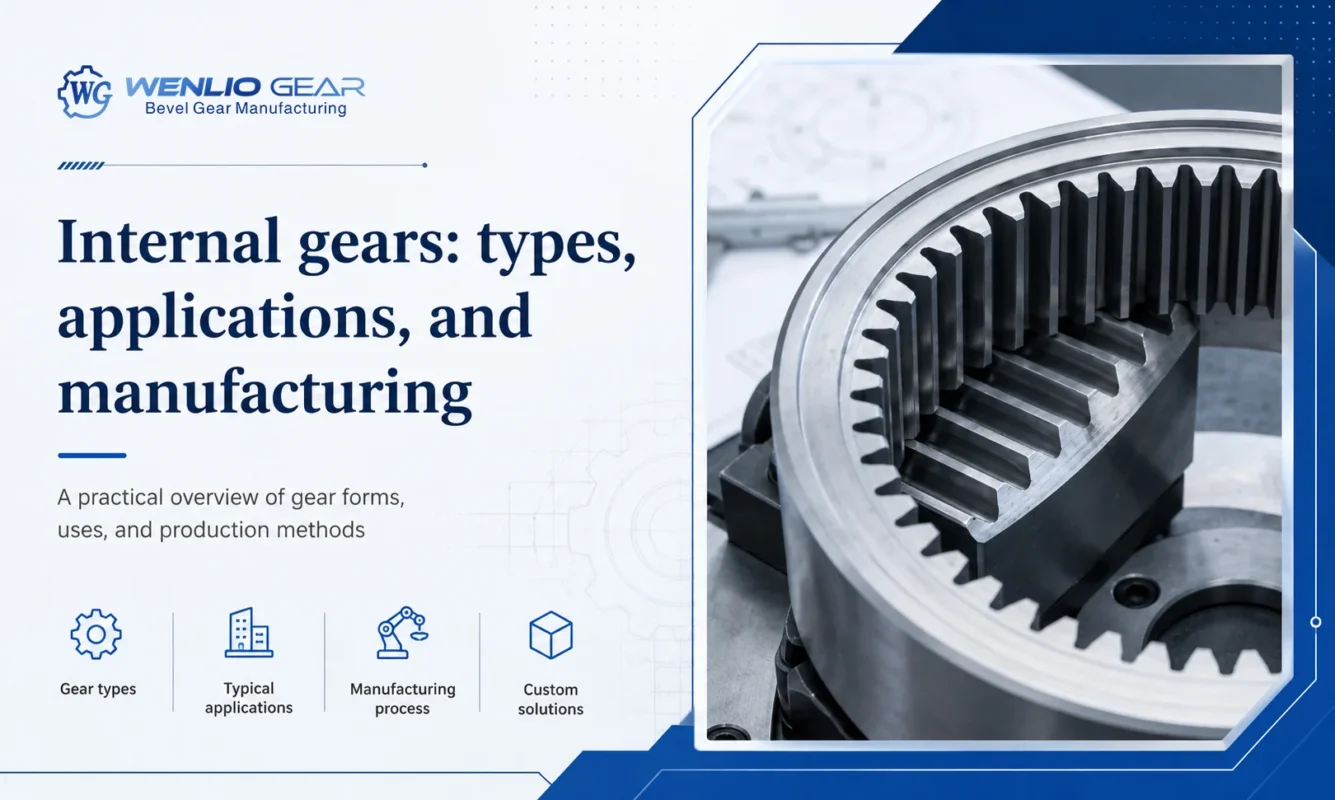
Introduction Internal gears have teeth on the inside of a ring and mesh with an external gear or pinion. Compared with common external gears, this arrangement supports more compact layouts, making internal gears a common choice for planetary gear systems, compact reducers, and other space-limited transmissions. However, an internal gear is not simply a gear […]
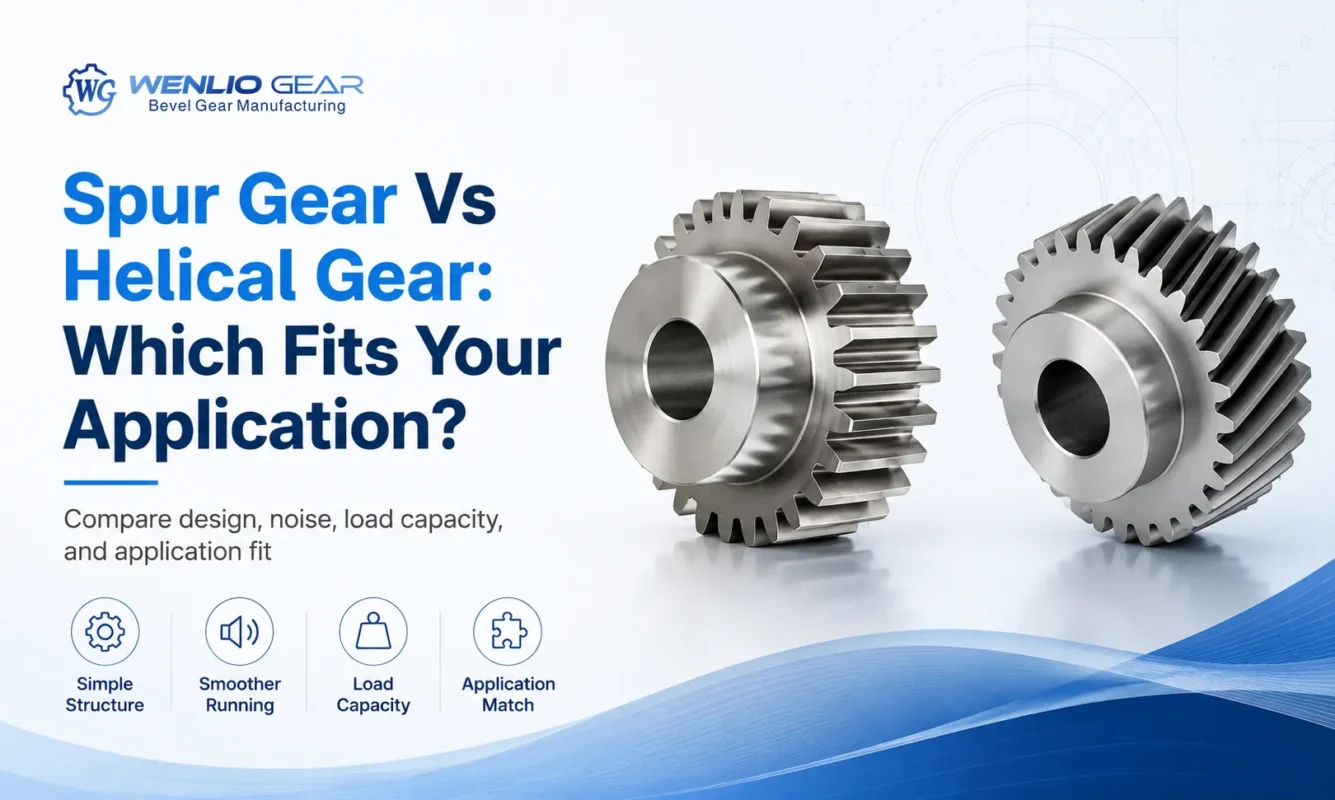
Introduction Spur gears and helical gears are both widely used in parallel-shaft transmissions, but their tooth-line directions are different. As a result, they also differ significantly in meshing behavior, noise, axial force, manufacturing, and application conditions. For custom gear projects, the choice cannot be based simply on which type is “more advanced.” In Wenlio project reviews, […]
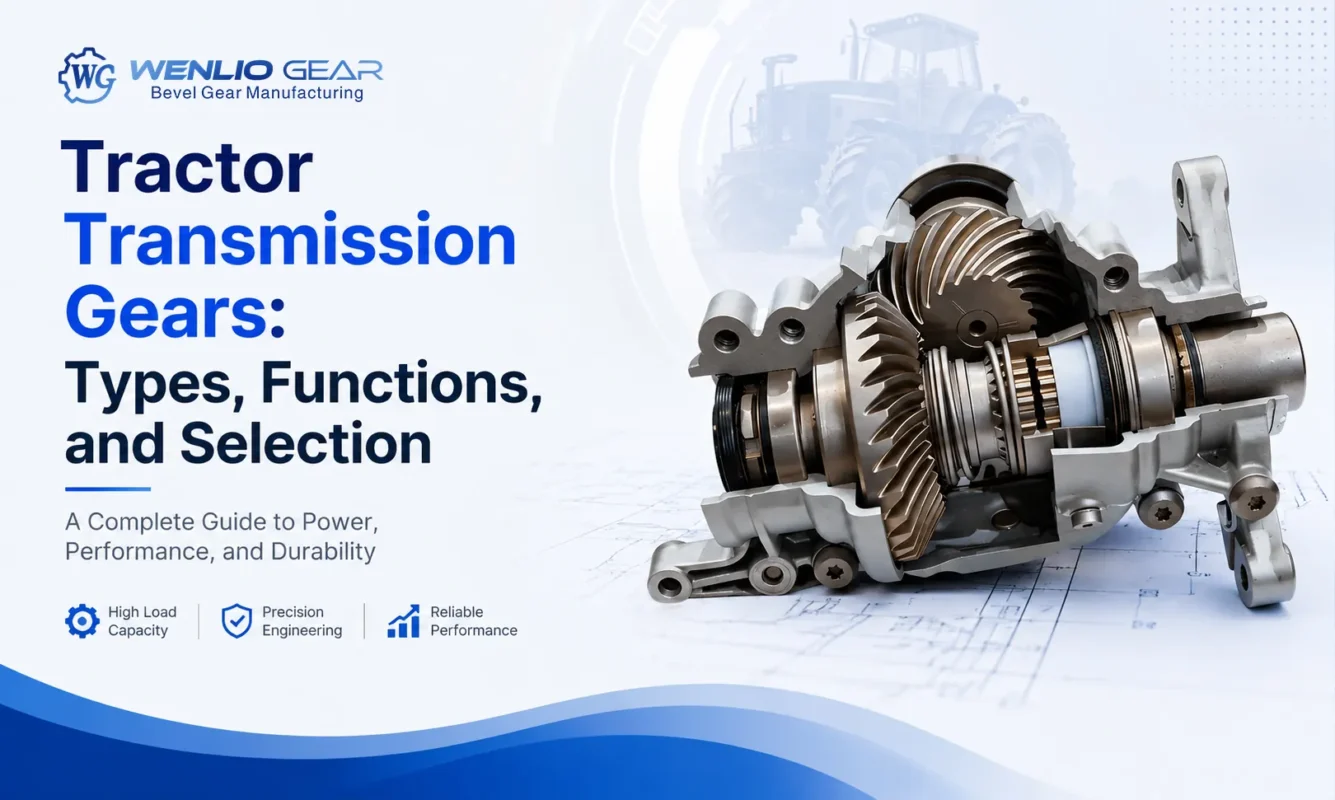
Introduction Power in a tractor passes through several gear stages before reaching the drive wheels, PTO, or other working mechanisms. Therefore, tractor transmission gears do not refer to one specific gear type, but to gear components used at different positions in the drivetrain. For agricultural machinery projects, Wenlio manufactures custom spur gears, helical gears, bevel gear sets, […]
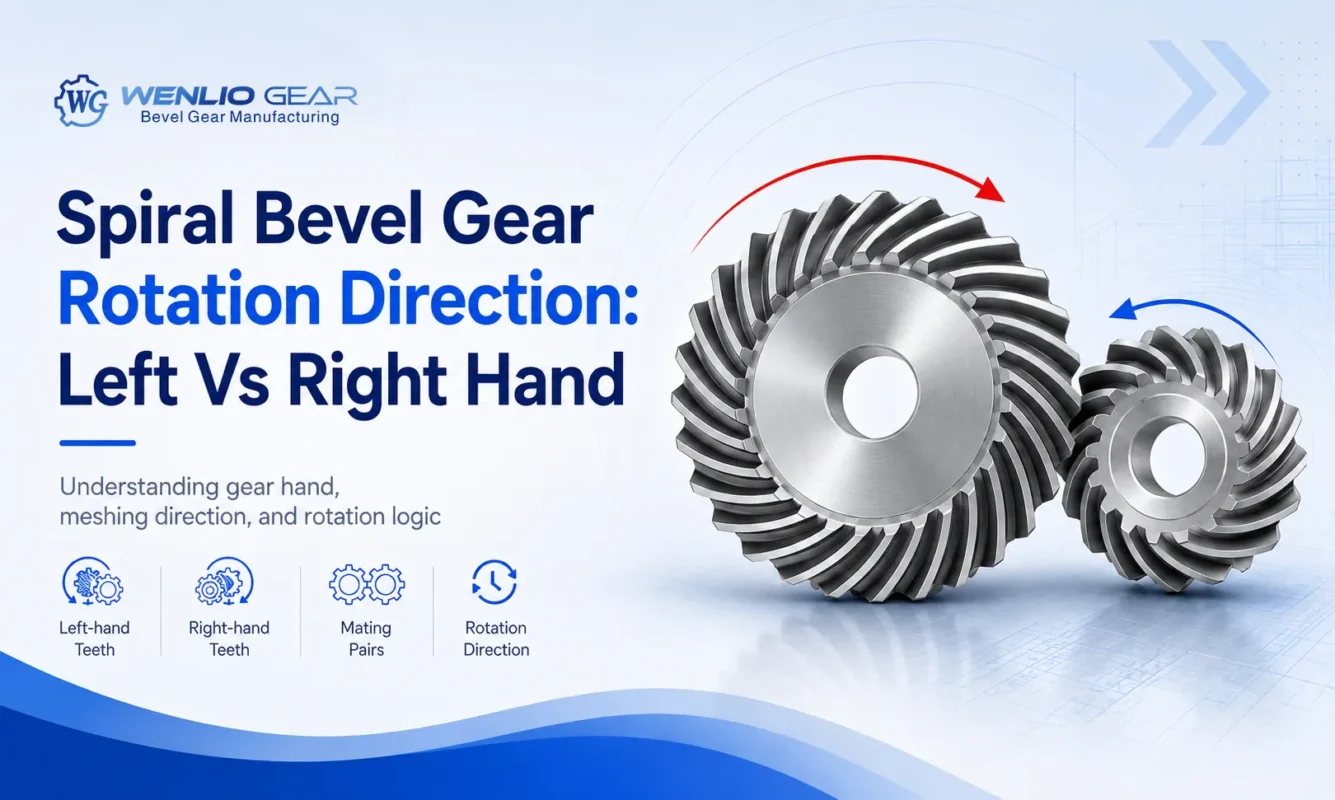
Introduction Left-hand, right-hand, clockwise, and counterclockwise often appear on the same spiral bevel gear drawing. They are connected, but they describe different aspects of the gear set. For spiral bevel gears, spiral hand refers to the direction of the tooth line, while rotation direction tells you how the gear turns in operation. In Wenlio bevel gear […]
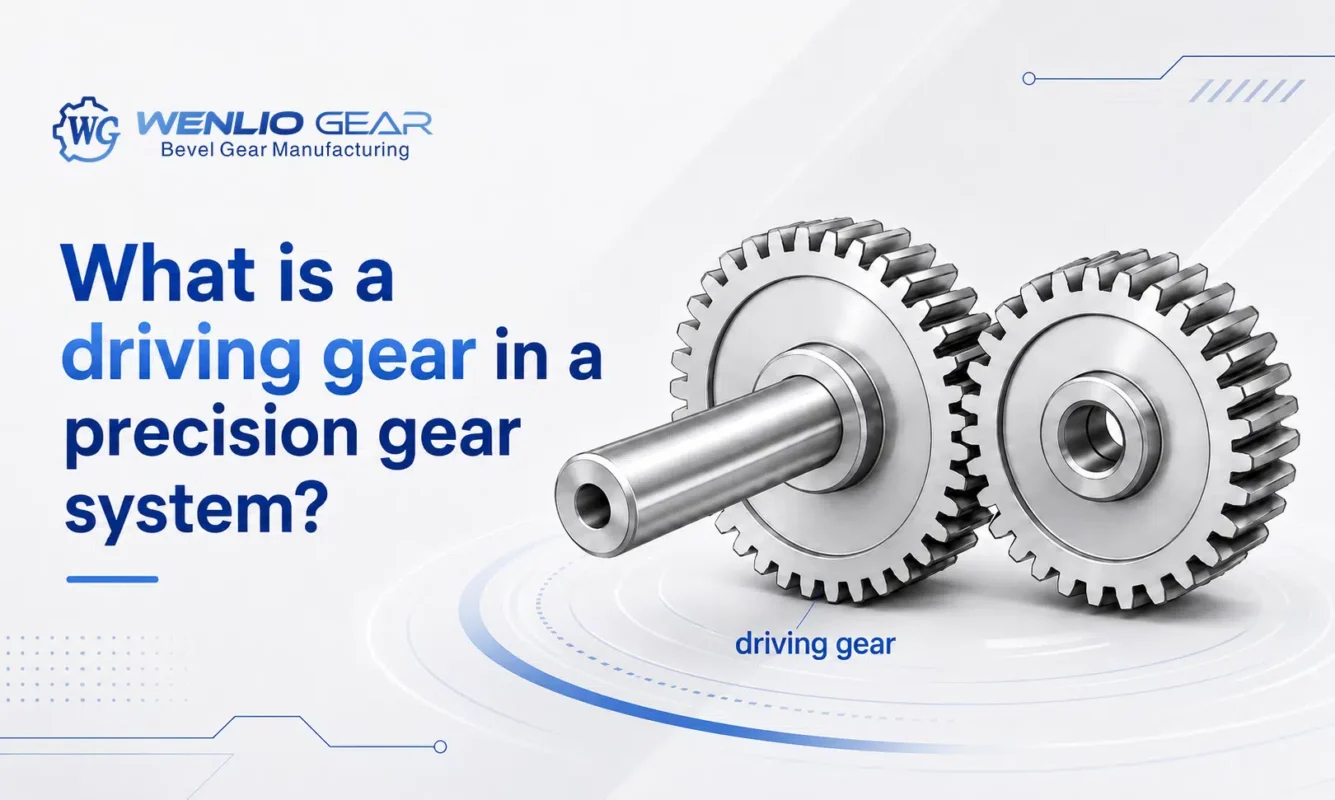
A driving gear is the gear that receives power in a specific gear mesh and transfers motion and torque to the mating gear. The term describes the gear’s role in the power path, not a separate type of gear. Spur, helical, bevel, and other gears can all act as the driver. Introduction Terms such as […]
Introduction When sourcing custom gears, the ability to make the part is only one part of supplier selection. Material, heat treatment, finishing, accuracy, inspection, and assembly conditions can all affect the final result. A reliable precision gear manufacturer should be able to review the available drawing or sample, identify key technical points, and define a suitable […]
Introduction A bevel gear pair can meet its drawing dimensions and still perform differently after assembly. A shifted contact pattern, changed backlash, increased noise, or higher operating temperature does not always indicate a manufacturing error. In such cases, also check the installed gear position. Bevel gear mounting distance is one of the dimensions that defines this […]
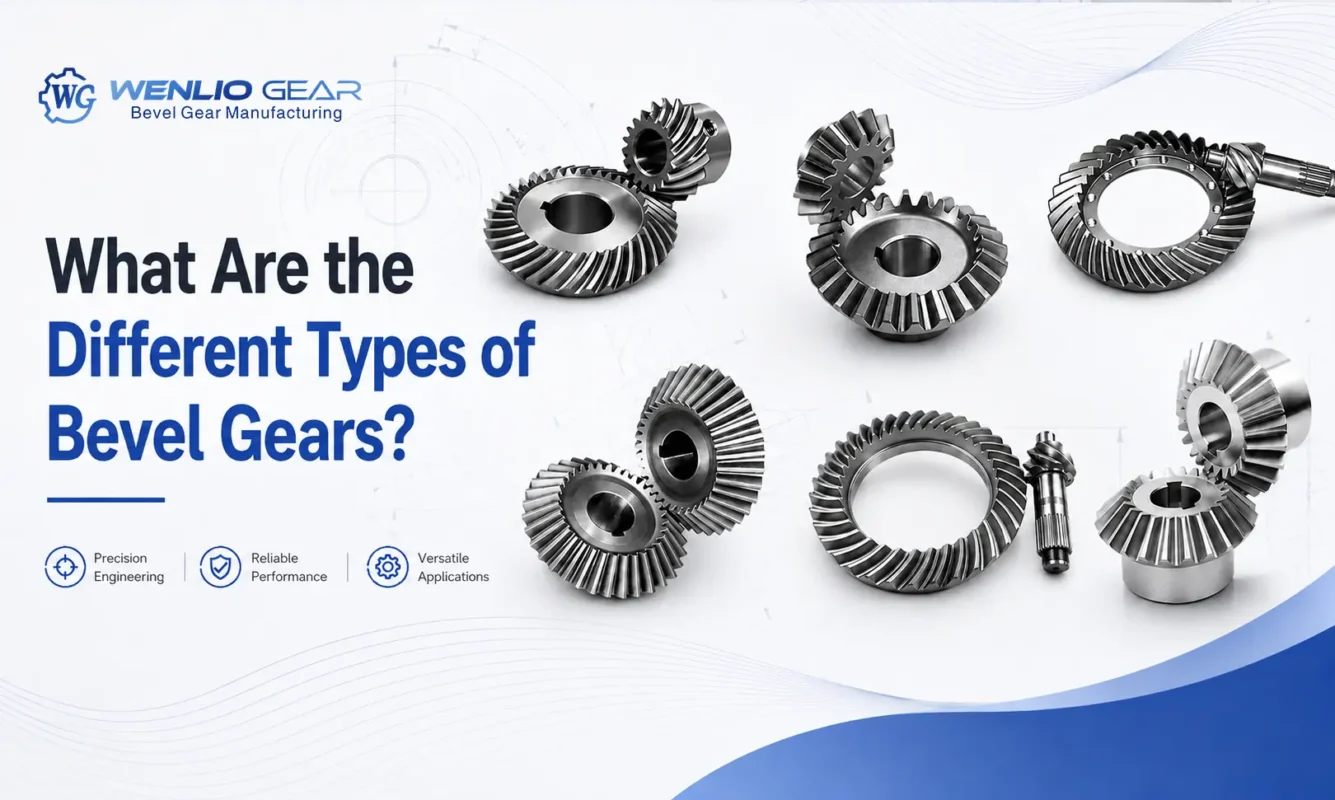
Introduction Bevel gears come in several forms, and the differences go beyond appearance. Tooth geometry, shaft position, gear ratio, and mating arrangement all affect how a gear set meshes and where it can be used. Straight, spiral, hypoid, Zerol, crown, and miter gears are all found in Wenlio’s bevel gear range, but they are selected […]
Introduction Industrial automation equipment often uses bevel gears to redirect power within limited spaces, including robot joints, packaging machines, conveyors, machine-tool angle drives, and positioning units. When selecting bevel gears for industrial automation, engineers and buyers should evaluate speed, torque, start-stop frequency, rotation direction, backlash, noise, installation space, and bearing conditions, because one tooth form […]