
Blogs, Gear Shaft
How to Specify Spline Shafts for Custom Gear Systems
Oct
Gear can meet its drawing requirements and still cause assembly trouble. Sometimes the problem lies in the spline connection, not the gear teeth.
Spline shaft transfers torque through teeth that fit matching grooves in a hub or coupling. Diameter alone isn’t enough. Tooth geometry, fit, load, and inspection matter too.
At Wenlio Gear, we work with custom gears and related shaft components. Here’s what buyers should check before ordering a spline shaft.
What information does a spline shaft specification need?
Start with the spline type, tooth count, tooth profile, main diameters, and engagement length. For involute splines, the drawing may also need the module or diametral pitch and pressure angle. Then confirm the mating part, fit tolerances, torque, speed, material, heat treatment, and inspection requirements.
If you’re replacing an existing shaft, send the mating hub or gear details too. Two shafts can look alike and still have incompatible splines.
Why does the connection matter so much?
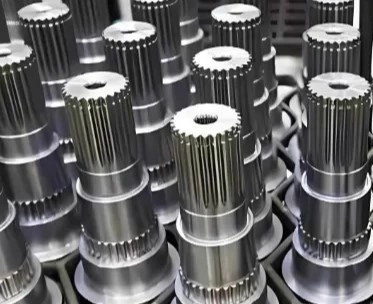
A spline spreads torque across several contacting teeth. But that load won’t necessarily be shared evenly. Alignment, tooth errors, clearance, and the way the shaft is supported can all affect contact.
An incorrect fit may prevent assembly. Too much clearance can cause movement and wear; too little can make installation difficult. These problems may be mistaken for gear quality issues.
The useful question isn’t simply, “Can this shaft be machined?” It’s “Will this shaft work with the parts around it?” Our article on how gears and shafts work together explains that wider relationship.
Choose the spline type before discussing dimensions
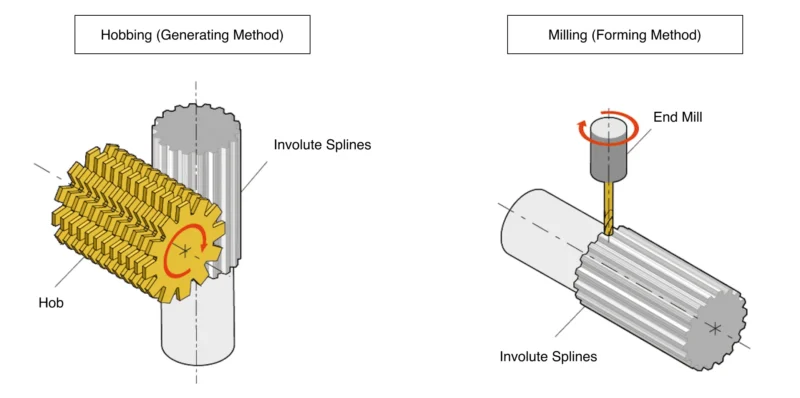
The two common designs are involute splines and straight-sided splines.
Involute splines have curved tooth flanks and are widely used in transmission connections. Straight-sided splines use teeth with straight sides and may be found in older equipment or particular mechanical designs.
Similar shaft diameters don’t make these types interchangeable. Internal and external spline profiles must match.
For replacements, start with the original drawing or a measured sample. For new designs, consider load, fit, and assembly.
If you need a basic explanation of the different types, see What Is a Spline Shaft?.
Which spline dimensions should buyers confirm?
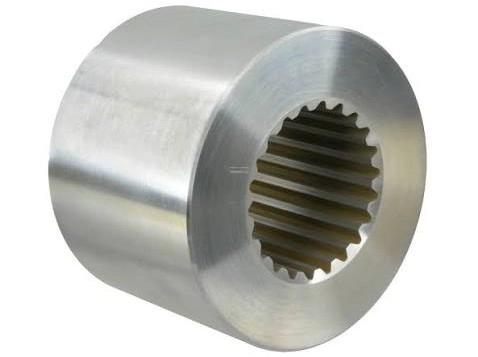
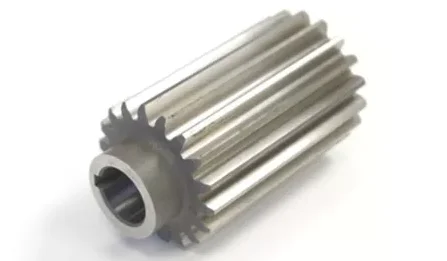
Tooth count and profile. These define how the external spline fits the internal teeth of the hub. For an involute design, the module or diametral pitch and pressure angle may be essential. Don’t assume that matching outer diameters mean matching tooth profiles.
Major and minor diameters. Show both alongside the other dimensions defining the tooth shape.
Tooth thickness and fit. Tooth thickness, mating tooth-space width, and tolerances affect clearance. Nominal sizes alone leave too much open to interpretation.
Spline length. State both the total length and the length engaging the hub. Longer isn’t automatically better; contact and alignment matter.
End features. Show chamfers, reliefs, shoulders, and nearby grooves. These small details can determine whether the gear or hub reaches its intended position.
When you send an RFQ, include the complete shaft drawing if possible, not just an enlarged view of the spline teeth.
Fixed fit or sliding fit?
This is one of the first questions worth answering: Does the mating component stay in one position, or does it need to move along the shaft?
A fixed connection is designed to hold the component in its intended position while carrying torque. A sliding connection must transmit torque and allow axial movement. That changes the requirements for clearance, surface condition, and lubrication.
Be careful not to confuse spline clearance with gear backlash. Spline clearance concerns the fit between the external and internal spline. Backlash concerns the gap between meshing gear teeth. They are separate design checks.
Don’t specify a tighter fit just because it sounds more precise. Match the actual movement and positioning requirements.
Give the supplier the real working conditions
A steady-running mechanism places different demands on a shaft than a drive with frequent stops or shock loads.
Useful operating details include:
- Normal and peak torque.
- Speed and frequency of starts or reversals.
- Shock loads, duty cycle, and intended service life.
- Lubrication, temperature, and exposure to contamination.
- Bending loads and the location of shaft supports.
They help assess spline size, engagement length, and material. Heavy loads may require a separate strength or contact review.
Look beyond the spline: Check the complete assembly
A gear may be mounted onto a splined shaft through an internal spline. In other designs, the gear and shaft form one piece, and a spline connects that part to another component.
Check where the gear sits, what prevents axial movement, and how the shaft is supported. Show relevant bearing seats, shoulders, and alignment requirements.
In a bevel gear system, the gear’s mounting position and contact with its mating gear also matter. A correctly sized spline can’t compensate for an incorrectly located gear.
An assembly drawing is useful here. It often answers questions that separate part drawings leave unresolved.
Select material and heat treatment for the job
Choose material for the expected torque, wear, and shocks. The design may need surface hardness, core toughness, or both.
When requesting a quote, state the material grade if it has already been chosen. Include heat treatment, hardness, surface finish, and any special requirements that appear on the approved drawing.
Heat treatment may change dimensions, affecting final finishing and inspection. Don’t add an unconfirmed hardness value just to fill the RFQ.
If the material isn’t decided yet, explain the operating conditions and mark the material choice for review.
Agree on inspection before production
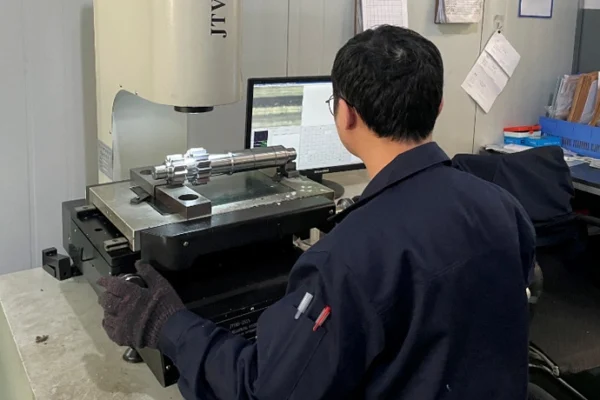
Checking only the shaft diameter won’t tell you whether the spline will fit. Depending on the drawing, inspection may include tooth dimensions, fit, critical shaft diameters, runout, and heat-treatment results.
A suitable functional gauge can help assess spline fit. For some projects, the most useful final check is an assembly test with the actual mating part. A dimensional report doesn’t replace that test when it is needed.
Agree on acceptance criteria and inspection records before production.
Custom spline shaft RFQ checklist
| Item | What to provide |
| Part information | 2D drawing, 3D model, sample, or clear photos |
| Spline geometry | Type, tooth count, profile, main dimensions, engagement length |
| Mating component | Hub or gear drawing, fit tolerances, fixed or sliding function |
| Operating conditions | Torque, speed, shock loads, lubrication |
| Shaft layout | Bearing seats, shoulders, gear position, alignment requirements |
| Material and quality | Material, treatment, finish, inspection and approval needs |
| Purchase details | Quantity, sample requirement, delivery expectations |
Missing details can be marked “To be confirmed.” Guessing a tooth profile or tolerance may create more work later than asking one extra question now.
Common RFQ mistakes to avoid
Sending only a shaft photo. Photos can show the overall shape but rarely reveal tooth tolerances or the condition of the internal spline. Provide measurements and the mating-part details where possible.
Copying an old specification without checking wear. A used shaft may have worn teeth or damaged ends. Measurements from a worn sample should be reviewed before they become production dimensions.
Leaving inspection until the end. If the buyer expects an assembly check or specific inspection records, say so before quoting. Those requirements may affect how the part is made and verified.
What happens after you send the drawing?
Begin with a drawing review of spline geometry, shaft features, and missing requirements.
Next, confirm mating fit, load, material, and inspection needs. Then plan machining, treatment, finishing, and checks.
Samples should be inspected against the agreed drawing. If the connection is critical, the customer should also check assembly with the real mating component. Once the sample and specifications are approved, the same agreed requirements can guide repeat production.
This helps catch problems before parts arrive.
Discuss your project with Wenlio
Wenlio’s custom gear includes related shaft components. When you inquire about a spline shaft or gear-shaft assembly, share the mating-part information along with the shaft drawing. It gives the project review a clearer starting point and helps identify questions before quoting.
FAQ
Can I request a quote without a drawing?
Yes, you can begin with photos, a physical sample, and known measurements. Final geometry and tolerances will still need to be agreed before production.
Are shafts with the same outside diameter interchangeable?
Not necessarily. Tooth count, profile, thickness, and fit must also suit the internal spline. Check the mating part before ordering a replacement.
Does a tighter spline fit always improve performance?
No. A sliding connection needs room for its intended movement, while a fixed connection has different positioning needs. The fit should follow the application.
Does every spline shaft need heat treatment?
No. It depends on the material, load, wear conditions, and performance requirements. The treatment should be chosen for the specific part.
What helps a supplier quote accurately?
A clear drawing, mating-component details, working conditions, inspection requirements, quantity, and delivery expectations. If any point is undecided, identify it rather than guessing.
Conclusion
A good spline shaft specification describes more than the shaft itself. It makes the connection, working load, and acceptance requirements clear to everyone involved.
Planning a custom spline shaft or gear-shaft project? Send Wenlio your drawing and mating-part details through Contact us to discuss the requirements and request a quote.
