
Small pits on a bevel gear tooth are often blamed on poor material or low hardness. Those are possible causes, but they are rarely the only ones. Pitting usually develops when repeated contact stress acts on a local area that is carrying more load than expected. The contact pattern, mounting position, lubrication, tooth finish, heat […]
Category Archives: Bevel Gear
Looking for a reliable bevel gear factory? Explore our offerings to find top-notch bevel gears for various applications today.
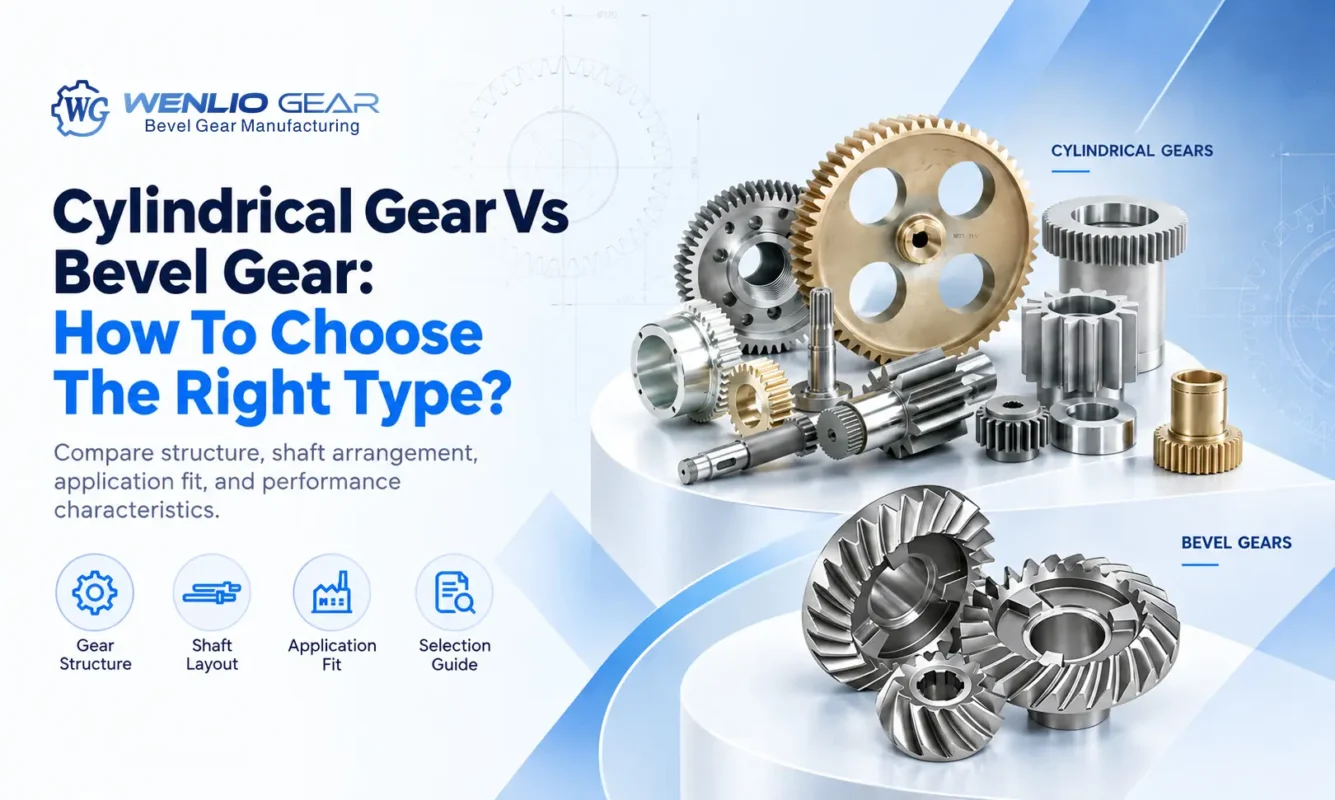
Introduction A cylindrical gear vs bevel gear comparison starts with the shaft layout. If the shafts are parallel, spur or helical gears are usually the starting point. If their axes intersect, bevel gears may suit the drive. The next question is whether that arrangement can handle the load within the available space. For buyers working […]
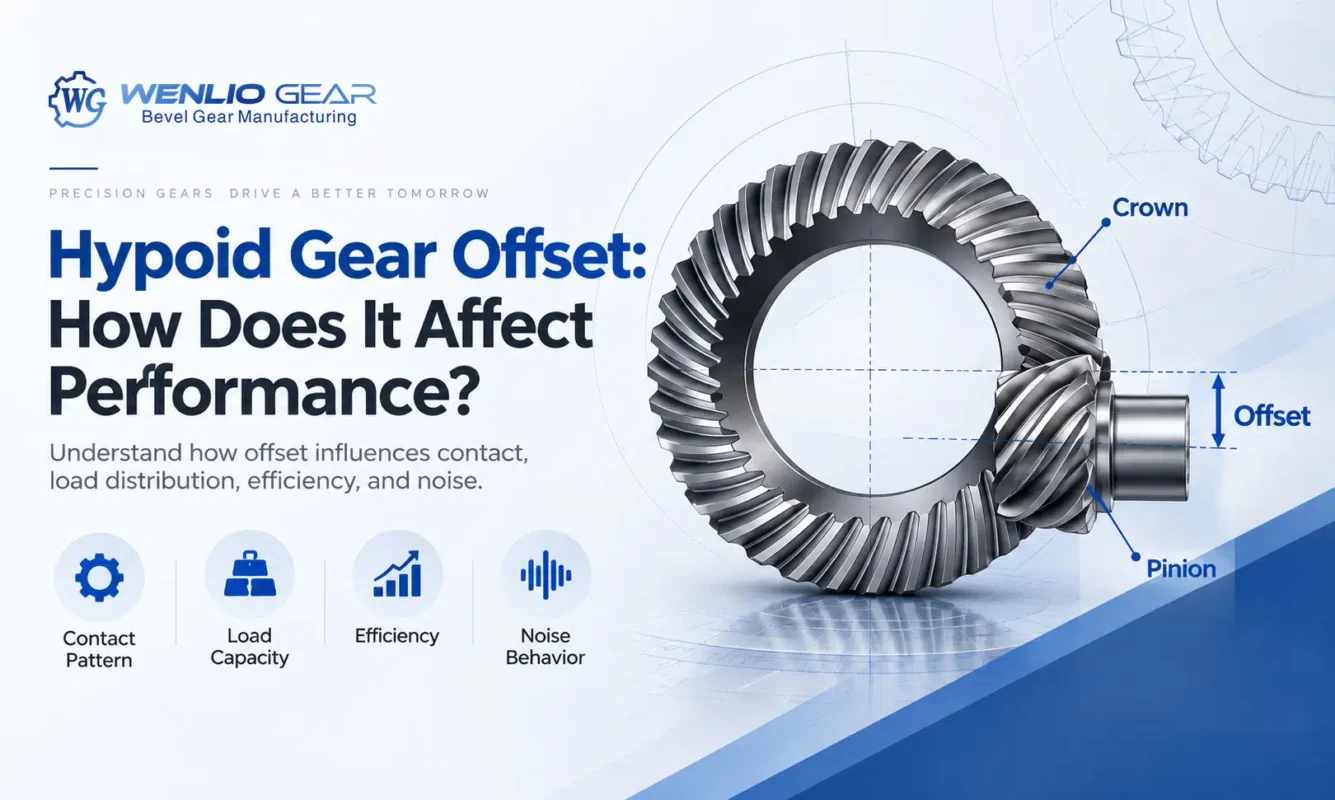
Introduction A hypoid gear set differs from a conventional bevel gear in one important way: the pinion axis and gear axis do not intersect. The shortest distance between those axes is the hypoid gear offset. It may look like a simple layout dimension, but it influences pinion geometry, tooth contact, sliding, lubrication, and the final […]
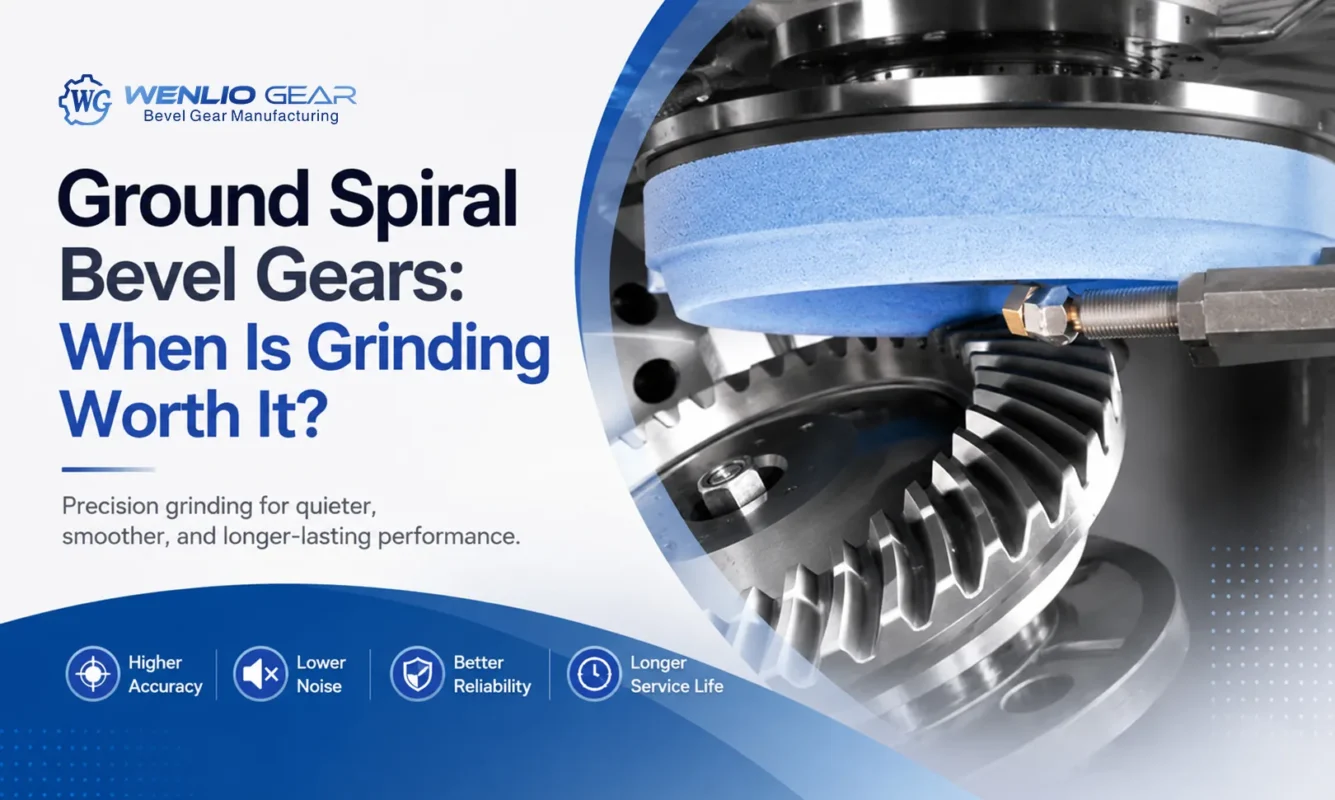
Introduction Ground spiral bevel gears are not necessary for every application. In many industrial drives, a properly cut, heat-treated, and lapped gear set can already meet the required accuracy, contact, and running performance. At Wenlio, the finishing route is selected according to the actual gear and application requirements. Grinding becomes more valuable when tighter post-heat-treatment […]
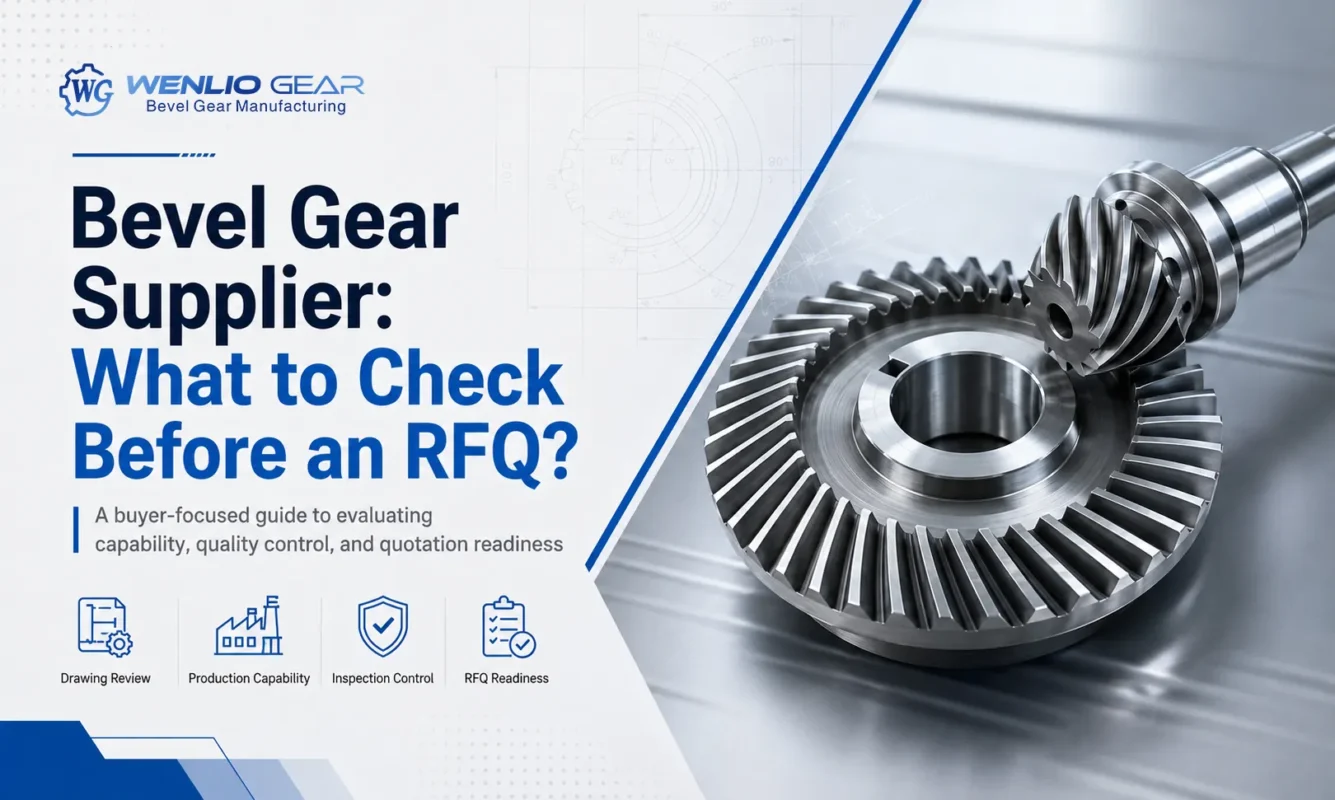
Introduction Not every bevel gear supplier is a good fit for every project. A company that can produce a standard straight bevel gear may not necessarily be the right choice for a spiral bevel, hypoid, or matched-pair project with defined contact and inspection requirements. Before sending an RFQ, it helps to check whether the supplier’s […]
Introduction Spiral bevel gear noise does not always mean there is a manufacturing problem. A new assembly, shim adjustment, bearing change, shaft-position shift, or even a difference between expected and actual load conditions can alter the contact pattern, backlash, or mounting condition and change how the gear set sounds. A more useful approach is to […]
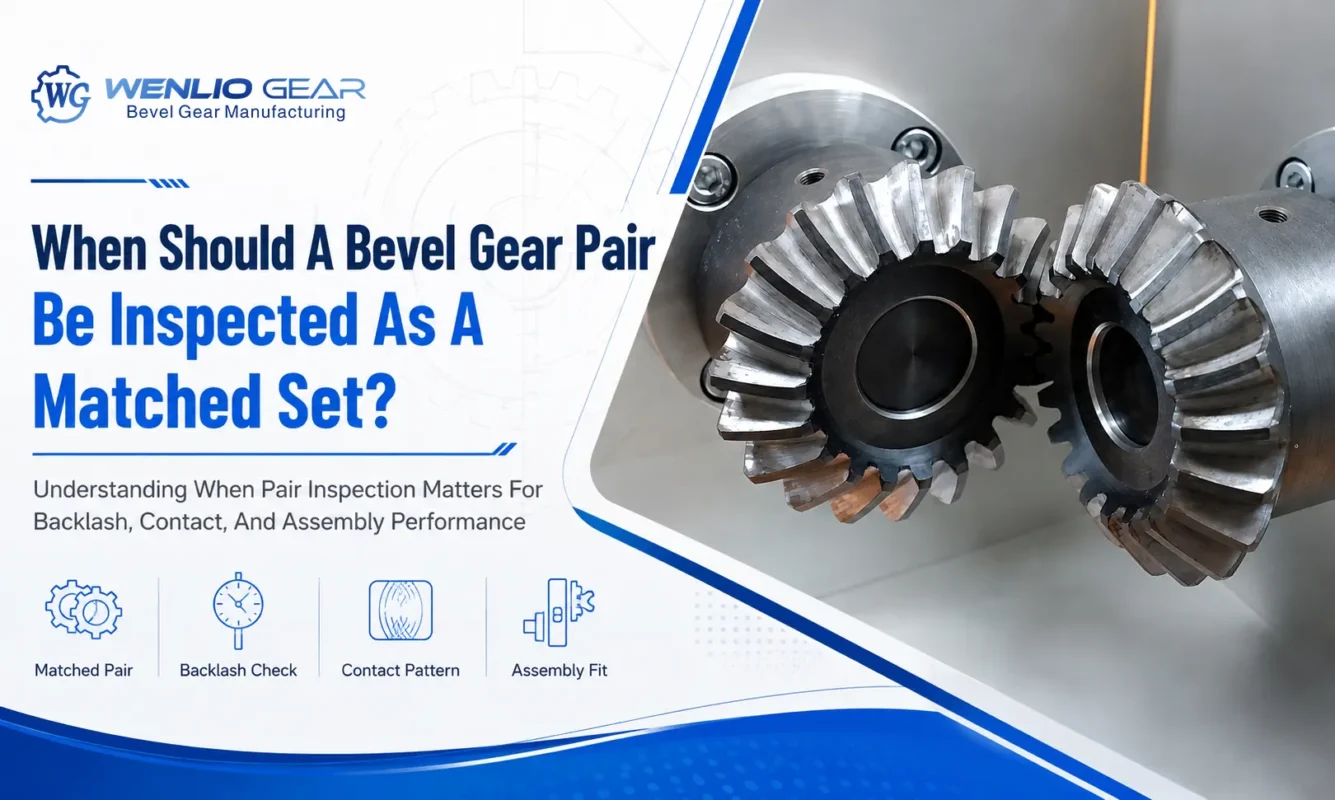
Introduction Two bevel gears may pass dimensional and tooth-geometry inspection individually but still fail to achieve the expected backlash or contact condition after assembly. For some projects, individual inspection is sufficient. However, when acceptance depends on actual meshing performance, matched-set inspection becomes more important. The key question is not whether every bevel gear pair must […]
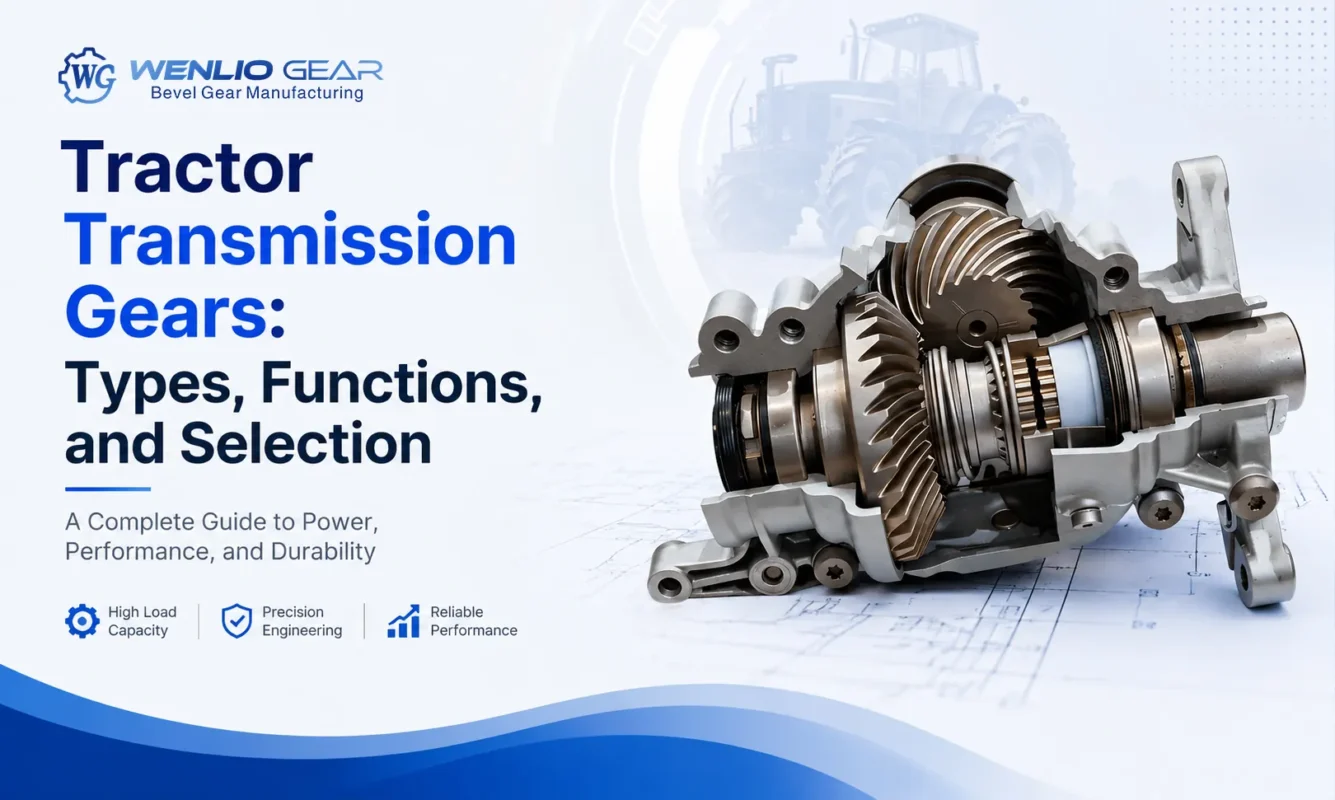
Introduction Power in a tractor passes through several gear stages before reaching the drive wheels, PTO, or other working mechanisms. Therefore, tractor transmission gears do not refer to one specific gear type, but to gear components used at different positions in the drivetrain. For agricultural machinery projects, Wenlio manufactures custom spur gears, helical gears, bevel gear sets, […]
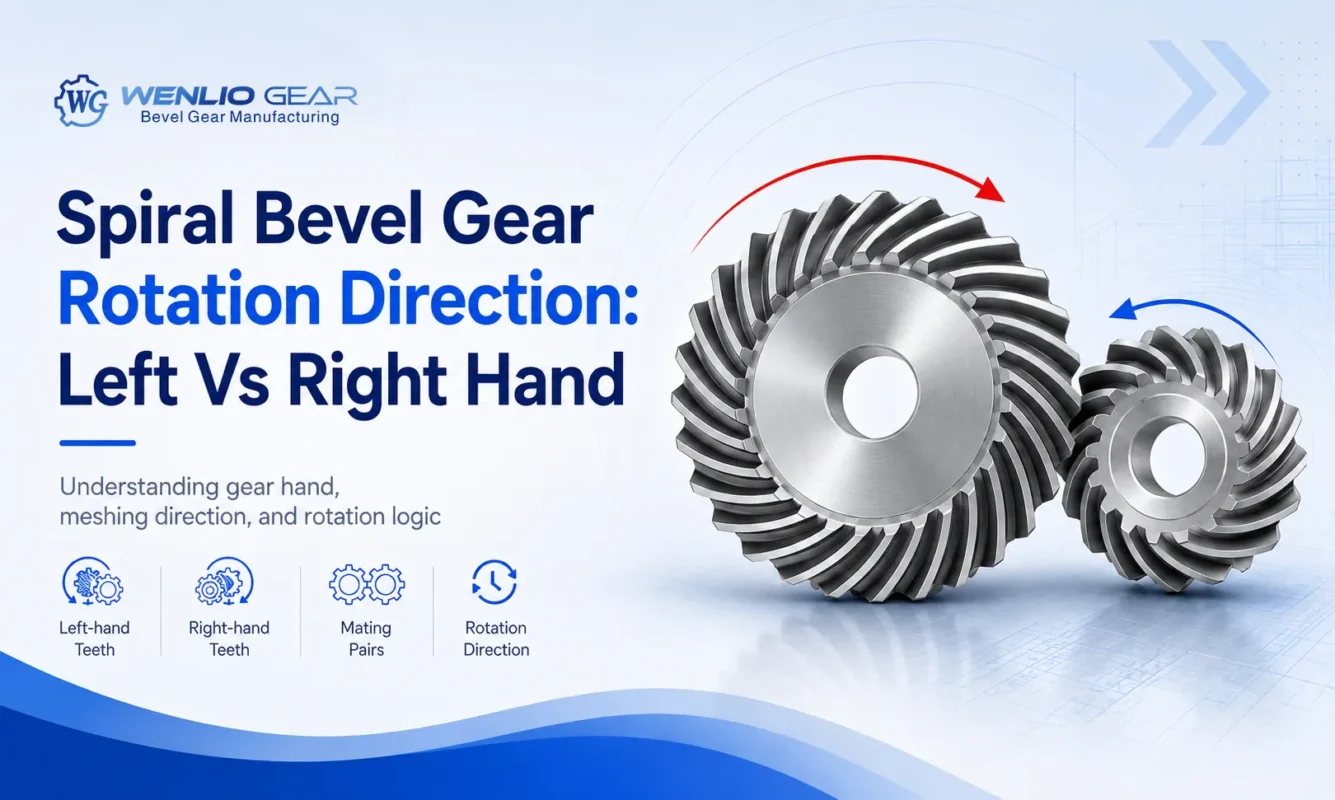
Introduction Left-hand, right-hand, clockwise, and counterclockwise often appear on the same spiral bevel gear drawing. They are connected, but they describe different aspects of the gear set. For spiral bevel gears, spiral hand refers to the direction of the tooth line, while rotation direction tells you how the gear turns in operation. In Wenlio bevel gear […]
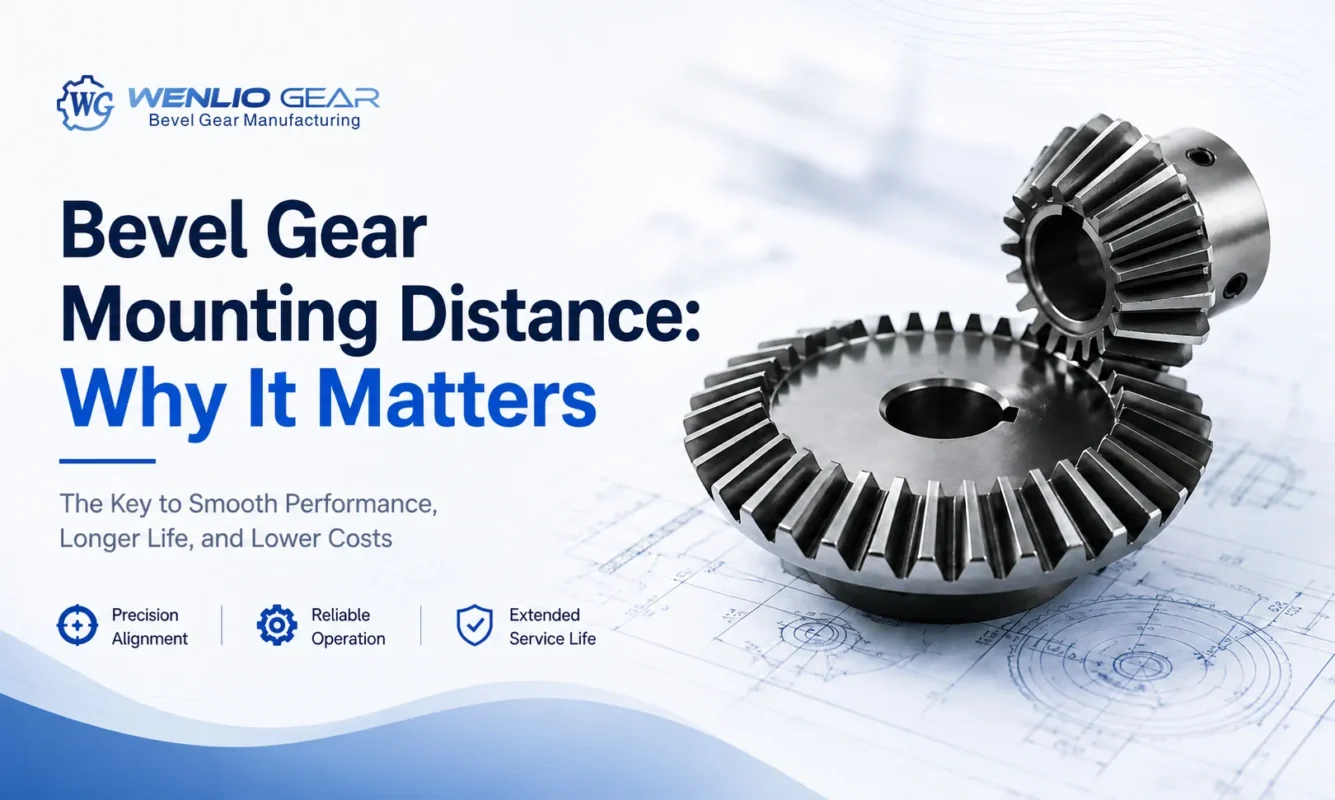
Introduction A bevel gear pair can meet its drawing dimensions and still perform differently after assembly. A shifted contact pattern, changed backlash, increased noise, or higher operating temperature does not always indicate a manufacturing error. In such cases, also check the installed gear position. Bevel gear mounting distance is one of the dimensions that defines this […]