
Blogs
When Should You Use Gear Shaping Instead of Hobbing?
Sep
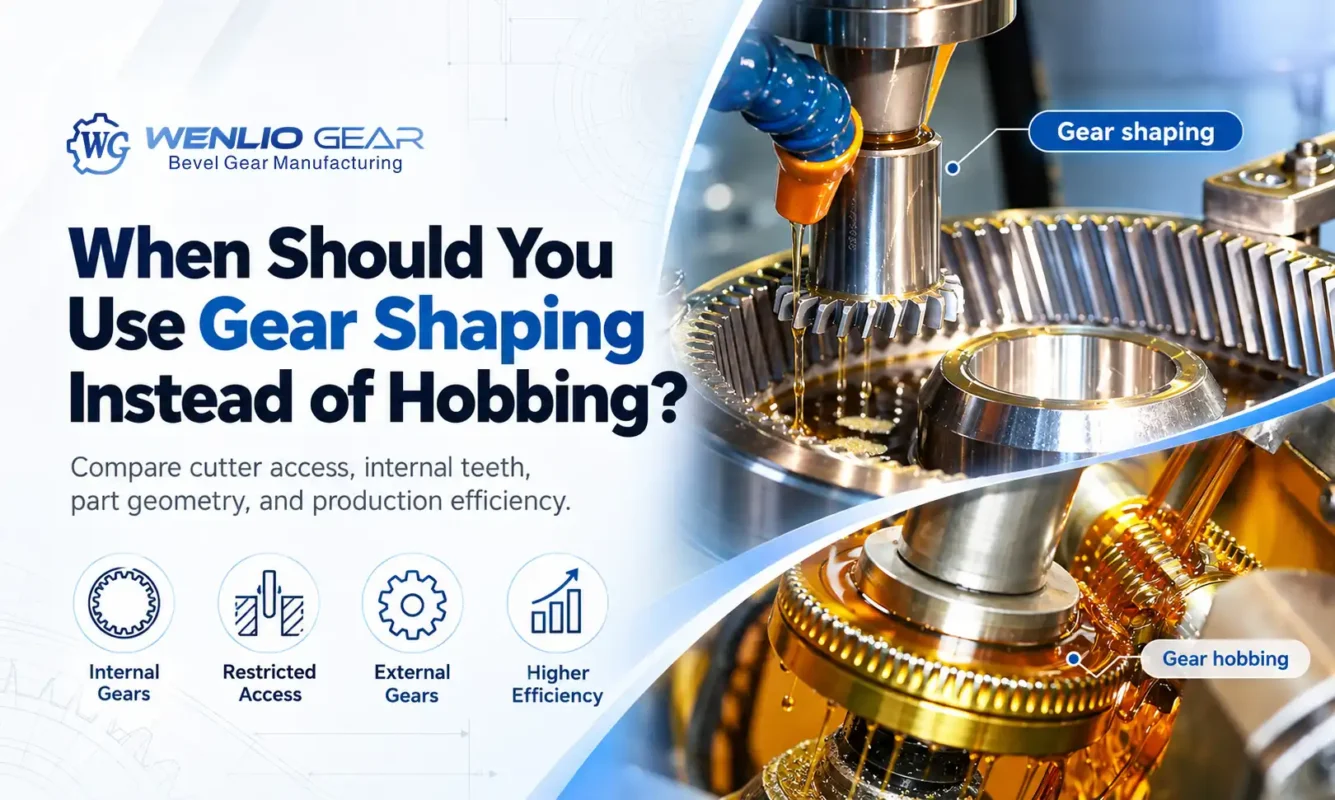
Gear hobbing and gear shaping are both common generating processes in gear manufacturing, but they are not interchangeable. Hobbing is usually the more efficient choice for standard external spur and helical gears, while shaping becomes more practical when the tooth geometry or cutter access makes hobbing difficult.
For buyers, the process choice should start with the gear structure rather than production speed alone. At Wenlio, manufacturing reviews consider internal or external teeth, tooth position, cutter clearance, accuracy requirements, and later finishing steps before the process is confirmed.
What Is the Main Difference Between Gear Hobbing and Gear Shaping?
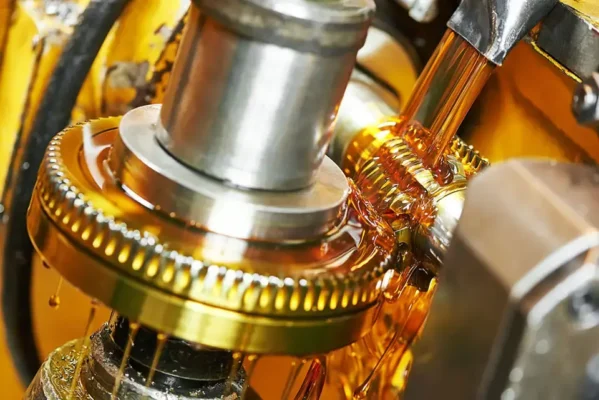
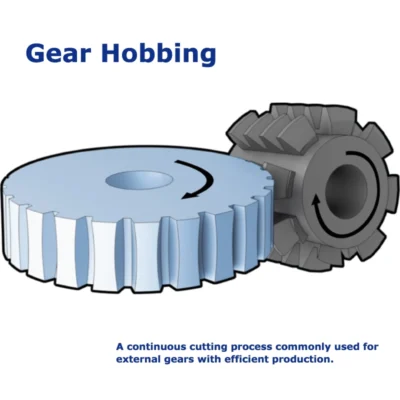
Gear hobbing uses a continuously rotating hob and workpiece to generate the tooth profile. The cutting action is stable and efficient, which is why hobbing is widely used for external spur gears, helical gears, and gear shafts.
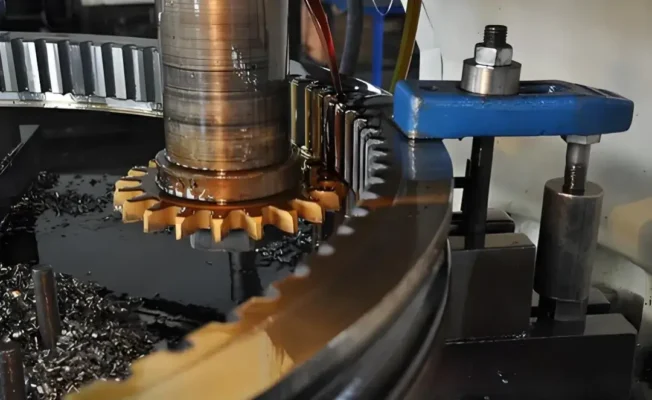
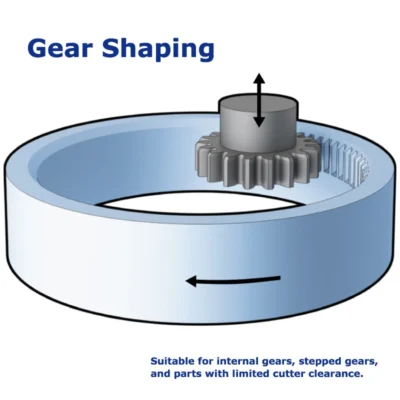
Gear shaping also generates the tooth profile, but a gear-shaped cutter moves back and forth while rotating in relation to the workpiece. This motion makes shaping more flexible for internal teeth and for parts where the cutter has limited access.
| Factor | Hobbing Is Usually Better For | Shaping Is Usually Better For |
| Gear type | Standard external gears | Internal gears and restricted external gears |
| Efficiency | Usually higher | Usually lower than hobbing |
| Cutter clearance | Needs clear cutting and overrun space | More flexible when access is restricted |
| Common applications | External spur gears, helical gears, gear shafts | Internal ring gears, compound gears, compact transmission parts |
| Accuracy potential | Suitable as a cutting or pre-finishing process | Can also meet precision requirements with suitable process control |
Neither process is automatically better. The right choice depends on whether the gear geometry allows the cutter to generate a complete tooth profile without interference.
Why Are Some Gears Difficult to Hob?
Hobbing needs enough space for the hob to approach, cut across the face width, and leave the tooth area. If nearby shoulders, another gear section, or a compact part layout blocks that path, the hob may not be able to reach the full tooth profile. This can affect the root area, tooth end, or transition region.
That is why module, tooth count, and material are not enough to select the process. The complete part geometry and cutter path must also be reviewed.
When Should Gear Shaping Be Considered First?
Internal Gears
Internal gears are one of the most common reasons to use shaping. Their teeth are located inside the bore, so a conventional hob normally cannot cut them in the same way it cuts external teeth. Internal ring gears used in planetary systems and compact transmissions are typical examples.
For these parts, the manufacturer also needs to review the inner diameter, tooth space, mating pinion, face width, and inspection method. Internal gear manufacturing should be evaluated as its own process route.
Limited Cutter Clearance or Compact Designs
Some external gears are difficult to hob because the tooth area sits close to another feature. Compact gearboxes, transmission modules, and reduction systems often leave little room for cutter approach or overrun.
If the gear position cannot be changed without affecting the assembly, shaping may provide a more practical cutting path. The key question is simply whether the tool can reach the entire tooth area and cut it consistently.
Compound or Multi-Section Gears
Compound gears, double gears, and multi-section parts may contain several tooth sections or diameters on one component. One section can restrict access to another, even when the tooth data itself is conventional.
In this situation, shaping may be easier to arrange for the restricted section. A complete 2D drawing or 3D model is normally needed because tooth count and module alone do not show the available cutter space.
When Complete Tooth Generation Is the Priority
For precision gears, the full tooth form matters more than choosing the fastest cutting method. Restricted hob access can influence the root, face edge, or transition area. If shaping provides a cleaner and more complete cutting path, it may be the more suitable option, especially when heat treatment or later finishing is planned.
When Is Hobbing Still the Better Choice?
For open external spur gears, external helical gears, gear shafts, and repeat production, hobbing is usually the first process to evaluate. When cutter access is clear and the tooth design is standard, its continuous cutting action generally makes production more efficient.
Hobbing can also be used as the initial tooth-cutting step before shaving, grinding, honing, or another finishing process. Shaping should therefore be viewed as an alternative for specific geometries, not as a replacement for hobbing in every project.
Does Gear Shaping Mean Lower Accuracy?
Not necessarily. Final gear accuracy depends on more than the cutting method. Machine condition, cutter accuracy, workholding, material, heat treatment distortion, gear geometry, and any later finishing operation all influence the final result.
With suitable process control, shaping can meet precision gear requirements. If the part geometry is poorly suited to hobbing, shaping may even be the more practical route because it avoids compromised cutter access or unnecessary design changes. When both processes are feasible, quantity, required accuracy, lead time, cost, and finishing steps should be compared together.
What Drawing Details Affect the Process Choice?
A process review should be based on the complete drawing or 3D model, not just a short gear data table. Important information includes:
- Internal or external teeth
- Module or DP, tooth count, and pressure angle
- Helix angle and hand
- Face width and tooth position
- Cutter clearance and nearby part features
- Bore size, fits, and mating gear information
- Material and heat treatment
- Accuracy grade, backlash, and inspection requirements
- Quantity and required lead time
Providing this information early helps the manufacturer judge the cutter path, workholding, finishing allowance, and inspection route before quotation. For custom gear projects, reviewing these details before production can also reduce avoidable process changes later.
How Can Buyers Tell If Gear Shaping May Be Needed?
Before sending an RFQ, buyers can do a quick geometry check. It does not replace a manufacturing review, but it helps identify projects that may need shaping rather than standard hobbing.
Start with four questions. Is the gear internal? Is the tooth area partly blocked by a shoulder or another gear section? Does the part need to remain compact with little room for cutter overrun? Does the component contain more than one tooth section? A “yes” to any of these questions is a reason to review cutter access more closely.
Also consider what happens after cutting. If the gear will be heat treated, ground, honed, or inspected as part of a matched assembly, the rough-cutting process should support those later steps. The most efficient cutting method is not always the best choice if it complicates finishing or inspection.
For a quotation, include the complete drawing or 3D model whenever possible. This allows the manufacturer to review the tooth position, surrounding geometry, workholding, and available cutter path before selecting the process.
How Do Hobbing and Shaping Fit Into the Full Manufacturing Route?
Hobbing or shaping is usually only one stage of gear production. Many gears are cut before heat treatment and then finished afterward if tighter accuracy, lower noise, or better surface quality is required.
The first cutting process should therefore be selected together with later operations. Heat treatment distortion, grinding allowance, final accuracy grade, surface roughness, matched-pair inspection, and noise requirements can all affect the route. Reviewing the complete sequence from the beginning reduces the chance of choosing a cutting method that creates problems later.
FAQ
When Should Gear Shaping Be Used Instead of Hobbing?
Gear shaping is commonly considered for internal gears, restricted cutter access, compact designs, and parts where a hob cannot generate the full tooth profile reliably.
Can Gear Shaping Be Used for External Gears?
Yes. Shaping can machine some external gears, especially when tooth access is restricted. For open external gears, however, hobbing is usually more efficient.
Why Do Internal Gears Often Require Shaping?
Because their teeth are inside the bore, a conventional hob usually cannot approach and cut them like external teeth. Shaping, broaching, or another internal-tooth process is normally considered.
Is Gear Shaping Less Accurate Than Hobbing?
Not by definition. Accuracy depends on the machine, cutter, workholding, material, heat treatment, gear geometry, and finishing route.
What Should Buyers Provide for Process Review?
Send the complete drawing or 3D model together with gear parameters, material, heat treatment, accuracy, tooth position, mating gear information, quantity, and inspection requirements.
Conclusion
Gear shaping is most useful when the geometry makes hobbing difficult: internal teeth, limited cutter clearance, compact layouts, or compound gear sections. For standard external gears with open access, hobbing remains the more efficient choice in many repeat-production projects.
The process should be selected from the complete part design and manufacturing route, not from one gear parameter alone. If you are developing an internal, compound, or other custom precision gear, Contact us and send your drawing, 3D model, and application details so the tooth geometry and suitable manufacturing route can be reviewed before production.
