
Blogs, Bevel Gear
When Should a Bevel Gear Pair Be Inspected as a Matched Set?
Aug
Introduction
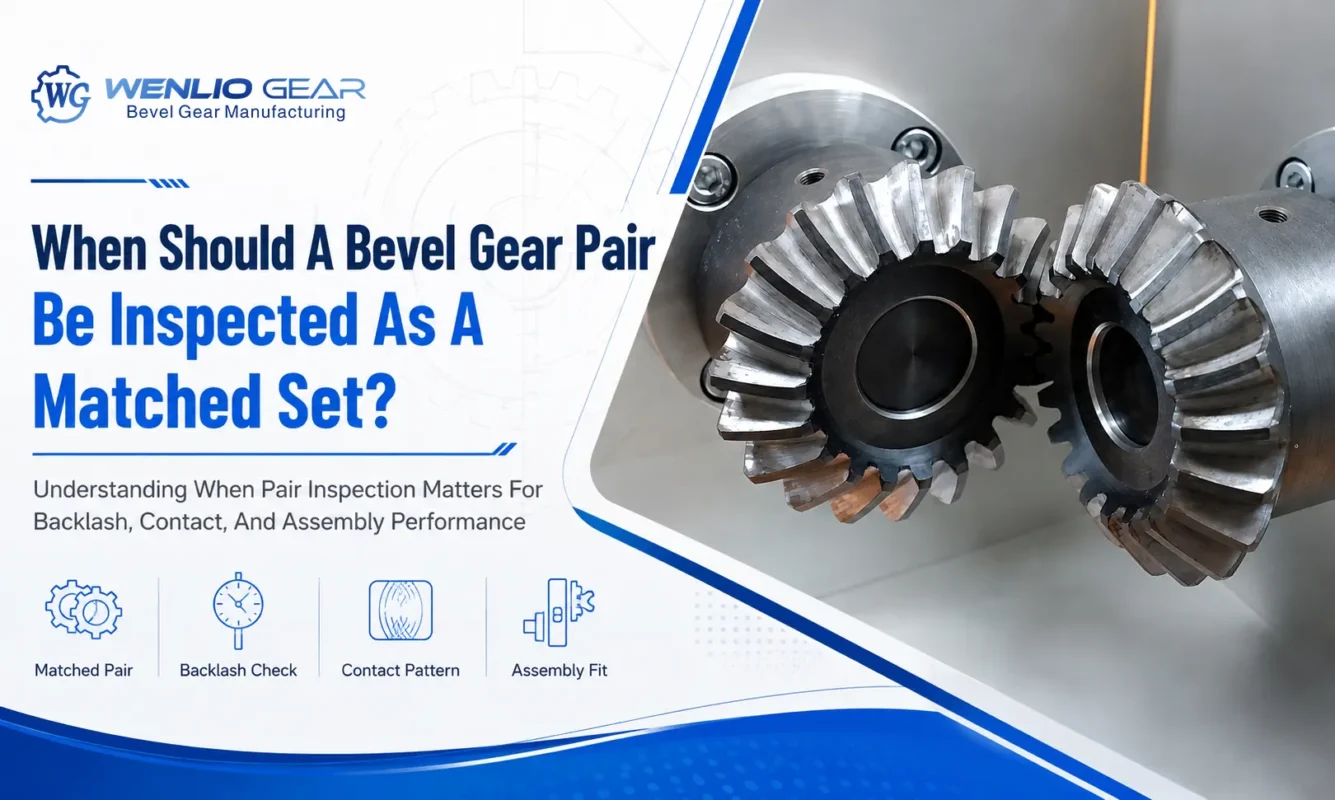
Two bevel gears may pass dimensional and tooth-geometry inspection individually but still fail to achieve the expected backlash or contact condition after assembly. For some projects, individual inspection is sufficient. However, when acceptance depends on actual meshing performance, matched-set inspection becomes more important.
The key question is not whether every bevel gear pair must be inspected as a set, but rather: which characteristics can only be confirmed after the gear and pinion are actually paired? For custom bevel gear projects at Wenlio, the inspection scope is normally determined by the gear type, manufacturing method, pairing requirements, and final acceptance criteria.
When Does a Bevel Gear Pair Need Matched-Set Inspection?
Matched-set inspection is most useful when the project needs to confirm how the gear and pinion actually mesh as a pair.
Typical situations include:
- The drawing specifies backlash;
- Contact pattern is an acceptance requirement;
- Gear and pinion are manufactured or adjusted as a pair;
- Spiral bevel or hypoid gear sets have specific mounting requirements;
- Noise or running stability is important;
- Both members are supplied together as one set;
- Replacement parts have uncertain mating conditions.
When Is Individual Gear Inspection Enough?
If the drawing mainly controls the dimensions and tooth geometry of each part, and the supplier is not required to verify a specific backlash or contact pattern after assembly, individual inspection may be sufficient.
Typical individual checks include:
- Bore and outside dimensions;
- Runout;
- Tooth thickness;
- Tooth geometry;
- Material;
- Hardness;
- Heat-treatment requirements.
What Requires a Complete Bevel Gear Pair?
Individual inspection cannot fully show how two parts will behave after they are assembled together.
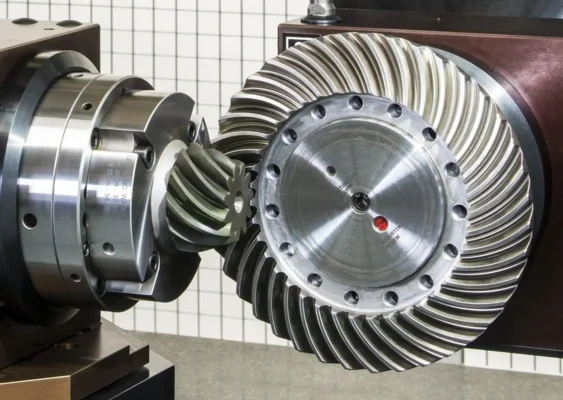
For example, bevel gear backlash depends on the relative position of the gear and pinion, while contact pattern must be evaluated under a defined pairing and mounting condition.
If either of these pair-level characteristics is part of the acceptance requirement, two separate inspection reports are not enough on their own.
Why Can Two Individually Accepted Gears Still Have Pairing Problems?
The final condition of a gear pair depends on more than either component alone.
Even if both the gear and pinion fall within their individual tolerances, the combined effect of several factors can still change the mesh:
- Tooth geometry variation;
- Runout;
- Mounting distance;
- Shaft position;
- Backlash adjustment;
- Mating gear condition.
This is why matched-set inspection is not simply a repeat of dimensional inspection. Its purpose is to confirm whether two individually accepted parts still meet the pair requirements when assembled under the specified mounting conditions.
Key Checks for a Matched Bevel Gear Set
The inspection scope depends on the drawing and application. Not every bevel gear set needs exactly the same checks.
| Check | Individual Gear | Matched Set |
| Dimensions | Yes | Usually not the main purpose |
| Runout | Yes | Reference information |
| Tooth geometry | Yes | May support pair evaluation |
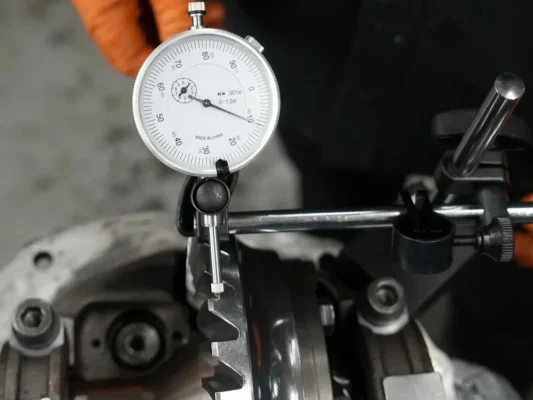
| Backlash | Limited | Yes |
| Contact pattern | No | Yes |
| Mounting condition | Individual references | Yes |
| Running / roll check | No | When required |
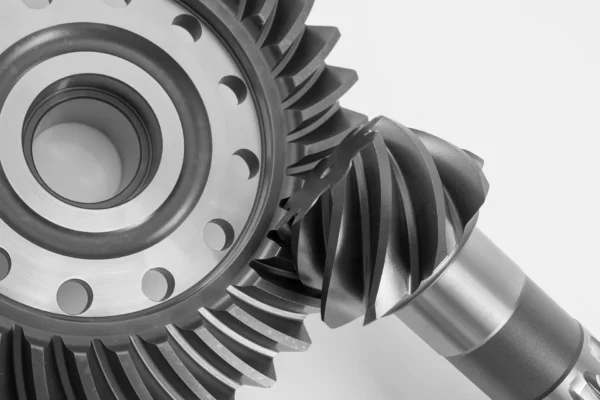
| Pair identification | No | Recommended for matched sets |
Backlash
Contact Pattern
Bevel gear contact pattern shows where the gear and pinion actually make contact under the inspection setup.
If the project specifies an acceptable contact area or position, the gear and pinion need to be checked together rather than as two separate tooth surfaces.
Pair Identification
Which Bevel Gear Projects Are More Likely to Need Pair Inspection?
The need for pair inspection is not determined simply by whether the parts are bevel gears. It depends more on how the pair is manufactured and how it will be accepted.
Spiral Bevel and Hypoid Gear Sets
Spiral bevel and hypoid projects often require closer attention to mounting position, backlash, and contact condition.
If the gear pair is manufactured, adjusted, or accepted according to a defined pair relationship, a functional pair check is often added to the individual inspections.
However, not every spiral bevel gear project needs exactly the same matched-set inspection process. The final scope should still follow the drawing and approved inspection requirements.
Noise-Sensitive Applications
For equipment where noise, vibration, or running smoothness matters, individual dimensional acceptance may not fully represent how the gear set will perform in operation.
These projects may also require checks such as:
- Backlash;
- Contact pattern;
- Mounting condition;
- Roll or running check, if specified.
Gear and Pinion Supplied Together
If the supplier manufactures both the gear and pinion and delivers them as one set, matched-set inspection makes it easier to establish a complete record for the pair.
For matched bevel gear sets, keeping the approved gear and pinion together also reduces the risk of mixing components after pairing or inspection.
When Does a Replacement Bevel Gear Need Pair Inspection?
It depends on the condition of the old mating gear.
If the existing gear is still in good condition and the new component is intended to continue working with it, the old mating part may provide useful information for assembly and contact review.
However, if the existing gear already shows:
- Heavy wear;
- Pitting;
- Tooth damage;
- Changed contact pattern;
- Unknown previous adjustment;
it should not automatically be treated as a correct inspection master.
What Should Buyers Provide for Replacement Projects?
Where possible, provide:
- Both gear and pinion;
- Photos of the installed pair;
- Original drawings, if available;
- Mounting references;
- Backlash requirement;
- Contact pattern requirements or records;
- Wear or failure condition.
This makes it easier to determine whether the project is suitable for single-part replacement or whether the complete gear pair should be reviewed again.
What Should Buyers Specify on the RFQ?
If matched-set inspection is required, it is better to define it during the quotation stage rather than adding the requirement after production.
Useful RFQ information includes:
| RFQ Item | What to Define |
| Pairing requirement | Individual parts or matched set |
| Backlash | Target or drawing requirement |
| Contact pattern | Required or not required |
| Mounting references | Inspection setup |
| Inspection report | Required records |
| Pair marking | Whether matched members must stay together |
| Quantity | Number of individual parts or complete sets |
The specified bevel gear accuracy grade should also match the inspection method and pair-level acceptance requirements.
This helps ensure that different quotations are based on a similar technical scope.
A note such as:
“Need inspection report”
is still too vague. A gear inspection report may include dimensional, tooth-geometry, runout, hardness, or other individual results, while matched-set inspection focuses on how the gear and pinion work together.
The required checks are therefore better agreed early as part of the bevel gear inspection scope.
How Does Wenlio Review Matched-Set Inspection Requirements?
Bevel gear inspection normally starts with the drawing and individual gear requirements, then checks whether the project also needs pair-level inspection.
The basic review includes:
- Gear and pinion drawings;
- Manufacturing and pairing method;
- Mounting references;
- Backlash and contact requirements;
- Required inspection records and pair identification.
For drawing-based or sample-based custom gear projects, mating gear and assembly information may also be needed if the pair requirements are not clearly defined in the available documentation.
FAQ
Should You Inspect All Bevel Gears as Matched Sets?
No. The need for matched-set inspection depends on the gear design, manufacturing route, and acceptance requirements. If the project only requires individual dimensional and tooth-geometry inspection, separate inspection may be enough.
Can Two Bevel Gears Pass Inspection but Still Mesh Poorly?
Yes. Two components can meet their individual dimensional requirements and still have unsuitable backlash, contact pattern, or mounting conditions when assembled together.
Is Backlash an Individual Gear Inspection Item?
Not in the final sense. Backlash is the clearance between mating tooth flanks, so it normally needs to be confirmed with the gear pair under a defined mounting condition.
Should You Always Inspect Spiral Bevel Gears as a Pair?
Not always. Many spiral bevel gear projects use pair inspection, but the design, manufacturing method, and acceptance criteria determine whether the project requires it.
What Reports Should I Request for a Matched Bevel Gear Set?
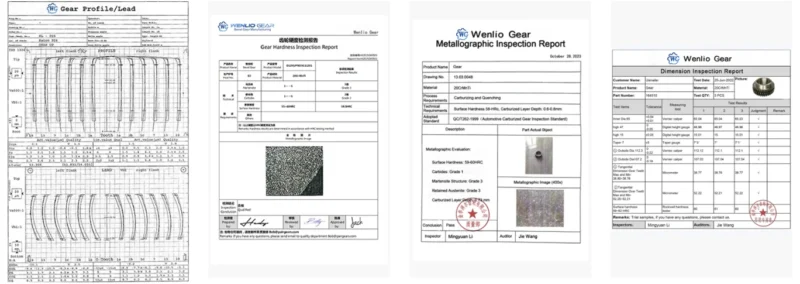
The required records depend on the project. They may include individual dimensional or gear inspection reports together with backlash, contact pattern, hardness, or pair-identification records. Not every project needs the same report package.
Conclusion
Matched-set inspection is not intended to repeat the inspection of two finished parts. Its purpose is to confirm how the gear and pinion perform together as a pair. When a project includes backlash, contact pattern, mounting conditions, noise requirements, or a defined pair relationship, individual inspection alone may not be enough.
For new or replacement projects, it is better to define individual inspection and matched-set inspection requirements at the RFQ stage, together with any required pair-level records. Drawings, mating gear information, and inspection requirements can also be submitted when you Contact Wenlio for project review.

Pingback: What Causes Pitting on Bevel Gear Teeth? - wenlio.com
Pingback: How Much Backlash Should a Bevel Gear Pair Have - wenlio.com