
Blogs, Bevel Gear
Spiral Bevel Gear Noise: What Should You Check First?
Sep
Introduction
Spiral bevel gear noise does not always mean there is a manufacturing problem. A new assembly, shim adjustment, bearing change, shaft-position shift, or even a difference between expected and actual load conditions can alter the contact pattern, backlash, or mounting condition and change how the gear set sounds.
A more useful approach is to first identify when the noise appears and what operating conditions make it change, then check the gear pair step by step. In Wenlio spiral bevel gear projects, noise is usually reviewed together with contact pattern, mounting conditions, and the actual operating setup rather than from the gear alone.
What Should You Check First When a Spiral Bevel Gear Is Noisy?
Do not rush to remove the gears, and avoid adjusting backlash immediately just to see whether the noise changes.
The first step is to identify the conditions under which the noise appears:
- No-load or under load;
- Low speed or high speed;
- Forward or reverse;
- Immediately after assembly or only after some running time;
- Whether the noise increases with speed;
- Whether there is one noticeable sound per revolution.
These details often help narrow the problem down.
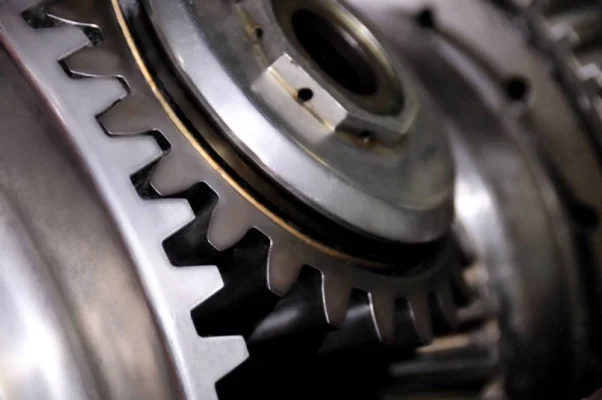
For example, if the noise becomes more obvious as load increases, the contact condition deserves early attention. If the noise appeared after shim adjustment or reassembly, mounting position and backlash should be checked first.
| Noise Condition | Check First |
| Noise starts after assembly or adjustment | Mounting position + contact pattern |
| Noise increases under load | Contact pattern |
| High-pitched whine that changes with speed | Contact condition + alignment / gear accuracy |
| Noise changes after shim adjustment | Backlash + mounting distance |
| Noise once per revolution | Runout / local tooth condition |
| Noise with rising temperature | Backlash + lubrication |
| Noise mainly in one direction | Drive / coast side contact |
Check the Contact Pattern First
For a spiral bevel gear pair, the contact pattern is often one of the first things worth checking.
What Can the Contact Pattern Tell You?
Tooth contact should stay within the intended area. If the pattern shifts clearly toward the toe, heel, or edge of the tooth surface, the current meshing condition may have moved away from the intended setup.
At that point, it is more useful to ask:
- Has the mounting position changed?
- Is the backlash still correct?
- Are the shafts aligned?
- Are the bearings supporting the pair correctly?
Bevel gear contact pattern does not identify one single cause on its own, but it gives a direct view of how the gear and pinion are contacting.
Check Backlash Together With Contact Pattern
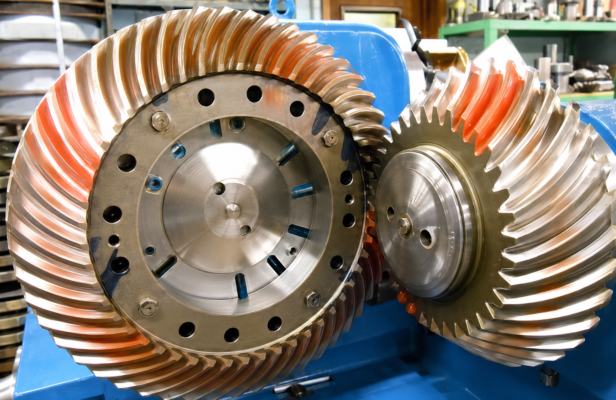
Backlash that is too large or too small can affect the way a spiral bevel gear set runs, but a backlash value by itself does not tell the whole story.
Why Should Backlash Not Be Checked Alone?
Bevel gear backlash changes with the relative position of the gear and pinion.
If the gear position is changed to bring backlash back into range, the contact pattern may move at the same time. After any meaningful adjustment, it is better to recheck:
Backlash + Contact Pattern
rather than relying on only one result.
This is especially important when noise appears after shim adjustment, bearing work, or reassembly.
Has the Mounting Distance Changed?
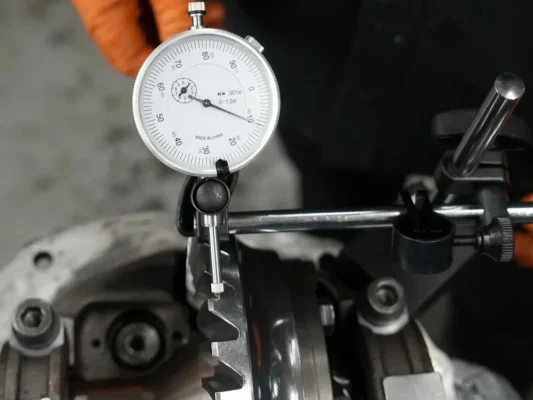
If noise appears after assembly, shim adjustment, bearing work, or another change to the gearbox setup, mounting position should be checked early.
Changes in bevel gear mounting distance can affect:
- Contact position;
- Backlash;
- Tooth engagement;
- Running temperature.
What Should Be Checked After Assembly or Adjustment?
Key points include:
- Gear axial position;
- Pinion axial position;
- Shim arrangement;
- Bearing position;
- Housing reference;
- Mating gear condition.
Even when the individual gear and pinion dimensions are within specification, a change in their installed positions can alter the final meshing condition.
Check Shaft Alignment and Bearings
If the contact pattern and backlash do not show an obvious problem, the next step is to look beyond the gears themselves.
Spiral bevel gears are sensitive to shaft position. A bearing or shaft that moves under load can change the actual tooth contact even if the static setup looks acceptable.
What Bearing Problems Can Affect Gear Noise?
Common items to check include:
- Bearing play;
- Incorrect preload;
- Worn or damaged bearings;
- Loose bearing seats;
- Shaft misalignment;
- Housing looseness or deformation.
If the noise becomes much more noticeable under load, bearing support and shaft position deserve closer attention.
Check Lubrication and Tooth Surface Condition
Lubrication problems can also make spiral bevel gear noise more noticeable.
Check:
- Oil level;
- Lubricant type and viscosity;
- Contamination;
- Oil supply to the mesh;
- Tooth surface condition.
If the tooth surface shows scuffing, pitting, uneven wear, or local damage, the noise may be a sign that the contact or lubrication condition has already deteriorated.
Bevel gear surface roughness is also worth checking, especially when the tooth surface condition looks unusual. Its effect should be considered together with load, gear accuracy, and lubrication rather than as a separate cause.
When Should You Check Gear Accuracy?
If the assembly and operating checks do not explain the noise, gear accuracy and tooth-flank condition should be reviewed in more detail.
Which Gear Errors Can Contribute to Noise?
Possible factors include:
- Runout;
- Pitch variation;
- Tooth profile deviation;
- Tooth lead / flank condition;
- Heat-treatment distortion;
- Finishing condition;
- Local tooth damage.
The point is not to ignore gear accuracy, but to avoid treating every noise issue as a manufacturing defect from the start.
For a newly produced gear set, if the inspection data, contact condition, and running behavior all show abnormalities, the manufacturing records should then be reviewed together.
Why Does Noise Sometimes Appear Only in One Direction?
Some gear sets run quietly in the forward direction but become noticeably louder in reverse.
In that case, the drive side and coast side contact should be checked separately.
Possible factors include:
- Contact pattern on both flanks;
- Backlash;
- Spiral hand and rotation direction;
- Bearing thrust direction;
- Load difference between forward and reverse.
For equipment that regularly runs in both directions, this operating condition is better defined early in the project rather than verifying the gear pair only in one rotation direction.
What Should Buyers Provide When Reporting a Gear Noise Problem?
Simply telling the supplier: “The gear is noisy.”
Usually does not provide enough information to identify the cause.
More useful information includes:
| Information | Why It Helps |
| Video / audio | Shows the type and timing of noise |
| Speed | Shows whether noise changes with rpm |
| Load condition | Helps compare no-load and loaded behavior |
| Rotation direction | Helps compare drive / coast sides |
| Contact pattern | Shows the actual meshing position |
| Backlash | Provides an assembly reference |
| Installation photos | Helps review mounting and bearings |
| Gear / pinion data | Confirms the mating relationship |
If the noise appeared after assembly, maintenance, or adjustment, it is also useful to note what changed, such as the bearings, shims, mounting position, or lubrication.
How Does Wenlio Review a Spiral Bevel Gear Noise Problem?
Noise troubleshooting usually starts with the actual operating condition and the gear-pair relationship rather than with a judgment about whether one component is acceptable.
The basic review focuses on:
- Speed, load, and rotation direction when the noise appears;
- Gear and pinion contact pattern;
- Backlash and mounting condition;
- Shaft, bearing, and lubrication condition;
- Gear inspection data, if needed.
For drawing-based or sample-based custom gear projects, it helps to review the mating gear, installation photos, operating conditions, and any available inspection data together rather than judging the part on its own.
FAQ
What Is the First Thing to Check When a Spiral Bevel Gear Is Noisy?
First confirm the speed, load, and rotation direction at which the noise appears, then check the contact pattern. If the noise started after assembly or adjustment, backlash and mounting position should also be checked.
Can Incorrect Backlash Cause Spiral Bevel Gear Noise?
Yes, but backlash should not be judged alone. It needs to be reviewed together with contact pattern, mounting position, and actual operating conditions.
Why Did My Bevel Gear Become Noisy After Assembly?
Possible causes include mounting position, shim adjustment, backlash, contact pattern, bearing setup, shaft alignment, or gear geometry. It is better to review the complete gear pair and installation system rather than one component alone.
Can Bearing Problems Cause Bevel Gear Noise?
Yes. Bearing play, incorrect preload, or shaft movement can change the actual position of the gear pair under load and affect both contact and noise.
Does Gear Noise Always Mean the Gear Was Manufactured Incorrectly?
No. Manufacturing accuracy is only one possible factor. Assembly, mounting distance, backlash, bearings, lubrication, and mating conditions can also affect noise.
Conclusion
Spiral bevel gear noise is easier to diagnose when the checks follow a logical order. Start with the operating condition, then review contact pattern, backlash, and mounting position before moving on to bearings, lubrication, and gear accuracy.
For a new or existing gear project, drawings, mating gear information, contact-pattern results, installation photos, and actual operating conditions can provide a much clearer basis for technical review. These details can be submitted when you Contact Wenlio for further evaluation.

Pingback: What Causes Pitting on Bevel Gear Teeth? - wenlio.com