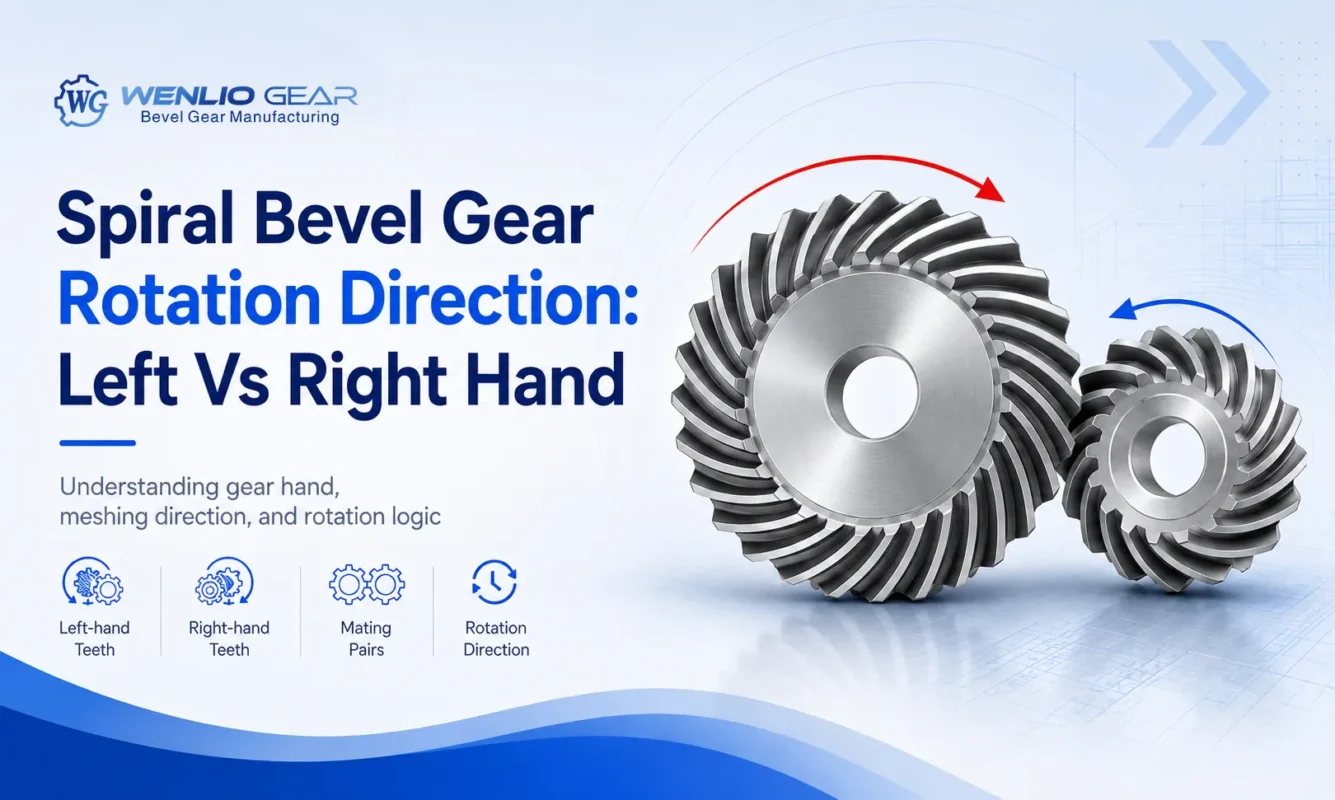
Introduction The curved tooth line is the most recognizable feature of a spiral bevel gear, but it is more than a visual difference. It changes how contact develops across the tooth surface, how neighboring teeth share load, and how forces are transferred into shafts and bearings. At Wenlio, spiral bevel gear projects are reviewed as […]
Category Archives: Bevel Gear
Looking for a reliable bevel gear factory? Explore our offerings to find top-notch bevel gears for various applications today.
After new or replacement bevel gears are installed, an unusual rise in operating temperature can raise concerns about material, heat treatment, or machining quality. However, overheating does not always mean that the gears themselves are defective. Backlash, tooth contact, mounting distance, shaft alignment, mating-gear condition, and operating load all affect how a bevel gear pair […]
Two bevel gears may have the same transmission ratio and look similar in size, yet still fail to mesh correctly. They may bind, rotate unevenly, produce unusual noise, or show poor tooth contact after installation. This happens because the ratio describes only the relationship between tooth counts. It does not fully define the tooth geometry, […]
Bevel gear prototypes do not always need dedicated cutting tools from the beginning. CNC milling may offer a more flexible option when the design is still changing, only a few parts are required, or the component has an unusual structure. At Wenlio, we review the drawing, gear type, accuracy requirements, material, quantity, and future production […]
Bevel gears with similar dimensions and materials can still receive very different quotations. Bevel gear cost depends not only on size and material, but also on accuracy grade, heat treatment, finishing method, pairing requirements, inspection scope, and order quantity. As a precision gear manufacturer, Wenlio evaluates each project according to its drawing, operating conditions, and […]
Introduction In a bevel gear RFQ, terms such as “high precision” or a single grade number are not enough to define manufacturing and acceptance requirements. Different standards may use different tolerance systems, inspection items, and evaluation methods. Two suppliers may therefore quote the same nominal grade while including different inspection scopes. As a precision gear […]
Choosing material for a bevel gear is rarely a single-line decision. A gear used in agricultural machinery may face shock loads and dust, while one used in an electric drive system may have different speed, lubrication, and durability requirements. These working conditions usually decide whether a standard steel, alloy steel, or a heat-treated material route […]
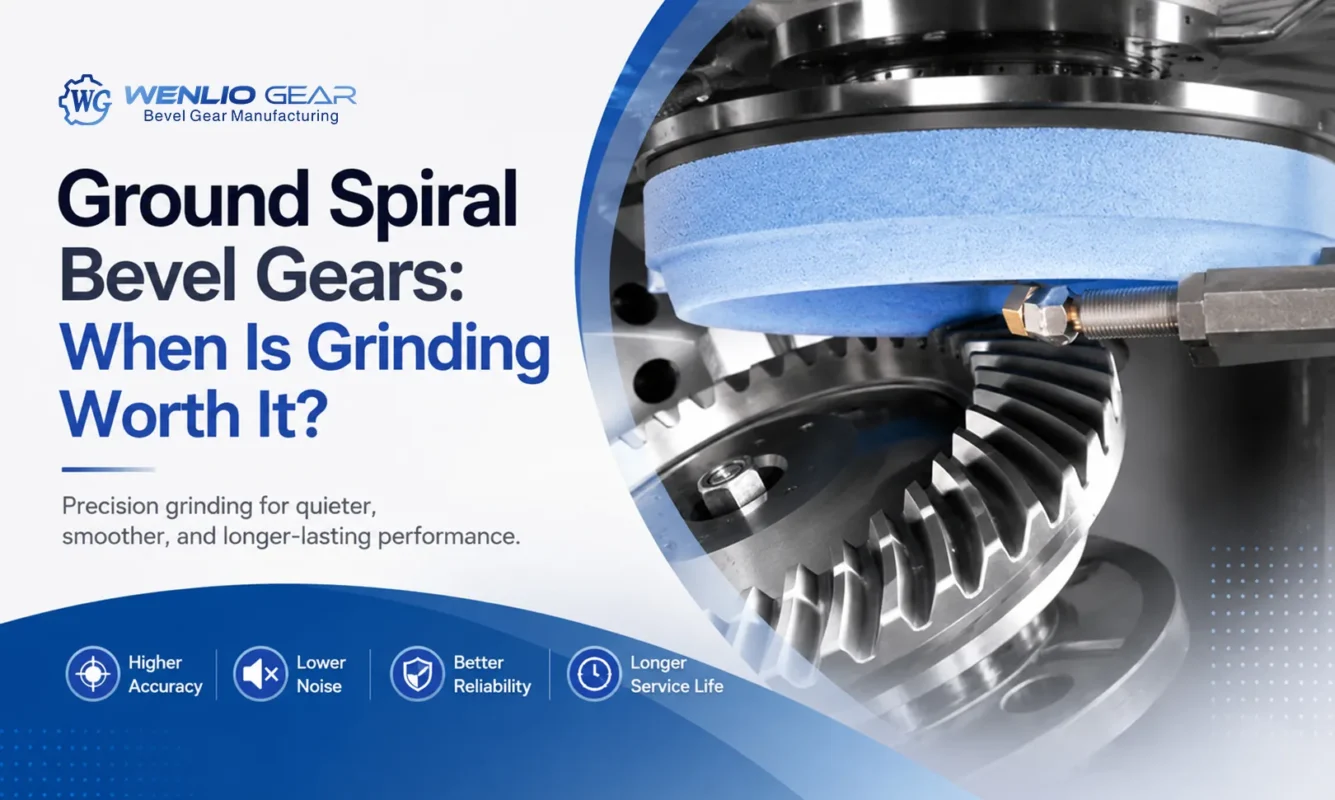
Introduction In bevel gear manufacturing, cutting the teeth does not always mean the part is ready for delivery. For straight bevel gears, spiral bevel gears, hypoid gears, and matched bevel gear sets, tooth contact, backlash, and assembly behavior may still need further review. Bevel gear lapping is often used as a light finishing and running-in process […]
For bevel gear buyers, shipment inspection is not only about receiving a test report. It is also a way to confirm whether the gears are ready for assembly, whether the mating parts are clearly matched, and whether key risks have been reviewed before delivery. For straight bevel gears, spiral bevel gears, hypoid gears, and matched […]
When buyers evaluate a bevel gear project, they usually check tooth count, module, material, heat treatment, accuracy grade, and price first. These details are important, but they do not always show how the gear pair will actually mesh after assembly. One detail that should not be overlooked is bevel gear contact pattern, because it shows […]