
Blogs, Bevel Gear, Spur Gear, Helical Gear, Crown Wheel and Pinion Gear
Tractor Transmission Gears: Types, Functions, and Selection
Aug
Introduction
Power in a tractor passes through several gear stages before reaching the drive wheels, PTO, or other working mechanisms. Therefore, tractor transmission gears do not refer to one specific gear type, but to gear components used at different positions in the drivetrain.
For agricultural machinery projects, Wenlio manufactures custom spur gears, helical gears, bevel gear sets, and related gear shafts based on drawings and application requirements.
What Are Tractor Transmission Gears?
Tractor transmission gears are components that transfer power, change speed and torque, or redirect motion within a tractor drivetrain. Common forms include spur gears, helical gears, bevel gears, and gear shafts, depending on the transmission layout.
For a custom project, the gear type should be evaluated together with ratio, shaft arrangement, operating load, tooth geometry, material, and mating conditions.
What Types of Gears Are Used in Tractor Drive Systems?
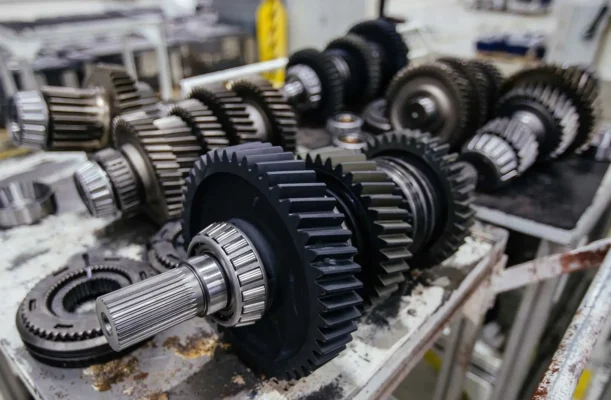
Different positions in a tractor drivetrain place different demands on the gears.
Spur Gears
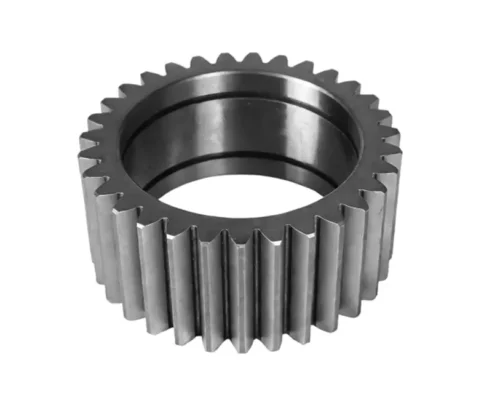
Spur gears use straight teeth and transfer power between parallel shafts. Their simple tooth form makes them suitable for many mechanical drive and PTO stages.
For agricultural machinery, spur gears can be specified by module, pressure angle, material, heat treatment, and accuracy requirements to match the drawing and operating conditions.
The mating gear, shaft connection, and operating load should also be considered during design review.
Helical Gears
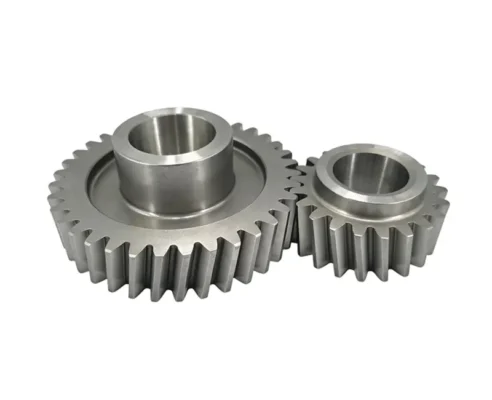
Helical gears have teeth set at an angle to the shaft axis. Their progressive engagement can provide smoother transmission in parallel-shaft applications.
For custom helical gears, important parameters may include:
- Module;
- Tooth count;
- Helix angle;
- Pressure angle;
- Face width;
- Material and heat treatment;
- Required accuracy.
Because helical gears also generate axial force, the bearing arrangement should support the resulting load.
Bevel Gears
Bevel gears transfer power between intersecting shafts and are useful where the direction of motion needs to change.
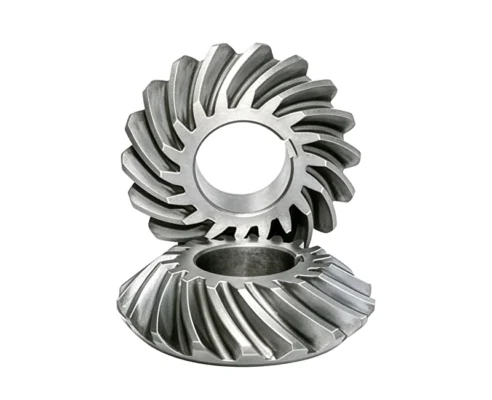
Straight, spiral, or other bevel gear forms may be selected depending on the application. Spiral bevel gears use curved teeth for progressive engagement and usually require close attention to shaft angle, mounting position, backlash, and tooth contact.
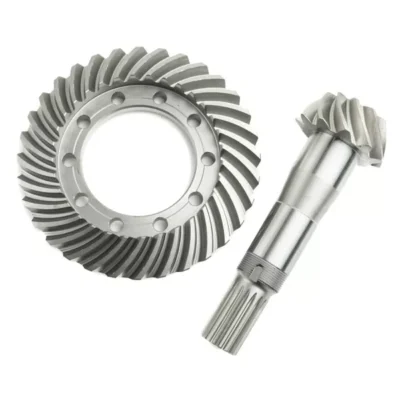
Crown and Other Bevel Gear Forms
Some compact right-angle drives may use crown bevel gears or other special bevel gear arrangements when the shaft layout and available space require a different geometry.
In tractor applications, the mating pinion, ratio, shaft angle, and installation space should be reviewed together before the gear geometry is finalized.
Where Are Tractor Gears Used?
The application position often determines which gear form and design conditions are suitable.
| Application Position | Possible Gear Type | Main Design Focus |
| Parallel-shaft drive stage | Spur or helical gear | Ratio, load, shaft connection |
| PTO drive | Spur, helical, or bevel gear | Speed, torque, duty cycle |
| Intermediate drive | Spur or helical gear | Gear pairing and shaft layout |
| Axle drive | Bevel gear set | Shaft angle and tooth contact |
| Right-angle drive | Spiral, straight, or crown bevel gear | Installation and mating geometry |
Different tractor designs may use different arrangements, so this table is a general reference rather than a fixed configuration.
How Do Tractor Transmission Gears Perform Different Functions?
Changing Speed and Torque
Different tooth-count combinations create different gear ratios, allowing the drivetrain to change output speed and torque.
The ratio should be reviewed together with tooth count, module, center distance, and mating gear geometry.
Transferring Power Between Parallel Shafts
Spur and helical gears are commonly used in parallel-shaft arrangements.
Spur gears offer a simpler structure, while helical gears provide more progressive engagement. The choice depends on the required operating conditions rather than one type always being better.
Changing the Direction of Power
Bevel gear sets can redirect power between intersecting shafts.
In axle or right-angle drive positions, the gear and pinion should be evaluated as a pair because shaft angle, backlash, mounting position, and tooth contact influence how the set operates.
Transferring Power to PTO Equipment
PTO gears transfer power to agricultural implements.
Their design may need to account for operating speed, torque, shock loading, duty cycle, and the shaft or spline connection used in the application.
What Determines the Selection of Custom Tractor Gears?
Shaft Layout and Gear Ratio
The first step is to confirm whether the shafts are parallel or intersecting, together with center distance, shaft angle, and required ratio.
These conditions help determine whether a spur, helical, or bevel gear form is appropriate.
Load and Operating Conditions
Agricultural machinery often experiences changing loads, so useful project information includes:
- Working torque;
- Peak torque;
- Speed;
- Shock loading;
- Duty cycle;
- Lubrication conditions.
These factors affect gear size, tooth geometry, and the required material properties.
Material and Heat Treatment
Material and heat treatment should match the load, wear requirements, and final accuracy.
Depending on the project, processes may include carburizing and quenching, quenching and tempering, or nitriding. During drawing review, define the exact heat-treatment route rather than rely on a general note such as “heat treated.”
More details are available in our guide to gear heat treatment requirements.
Accuracy and Gear Pairing
A higher accuracy grade is not automatically necessary for every tractor application.
The required level should reflect the actual needs of the project, including runout, tooth geometry, backlash, mating condition, and installation requirements.
For bevel gear sets, the relationship between the gear and pinion is especially important.
What Should Be Confirmed Before Custom Manufacturing?
A custom tractor gear project normally requires more than the gear type and tooth count.
| Information | What to Confirm |
| Drawing | 2D drawing and available 3D model |
| Gear parameters | Module, tooth count, pressure angle |
| Tooth direction | Helix angle or bevel gear geometry when applicable |
| Shaft connection | Bore, spline, keyway, or integrated shaft |
| Mating gear | Tooth data and mating relationship |
| Material | Exact grade or approved material requirement |
| Heat treatment | Hardness, case depth, and process if specified |
| Application | Load, speed, duty cycle, and quantity |
Clear project information helps identify design questions before quotation and manufacturing. If any parameters remain open, share the application details so we can review the project further.
How Does Wenlio Review a Custom Tractor Gear Project?
Wenlio reviews tractor gears as custom gear projects rather than applying one fixed specification to all agricultural machinery applications.
The review normally covers:
- Drawing and gear geometry
Critical dimensions, tooth parameters, and shaft interfaces. - Application requirements
Speed, torque, duty cycle, and operating position. - Manufacturing route
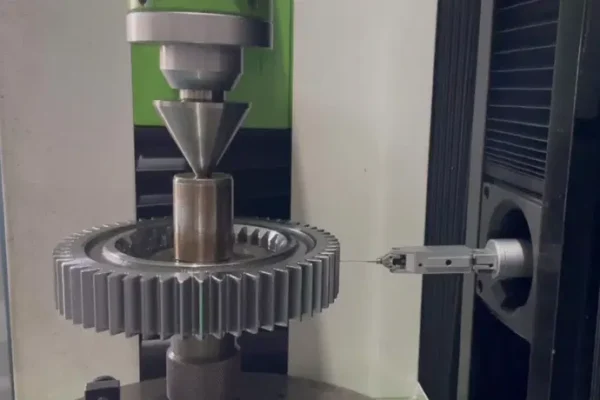
Material, heat treatment, machining, and finishing requirements. - Accuracy and inspection
Critical dimensions, runout, tooth geometry, and inspection records. - Prototype and production plan
Quantity, design status, and inspection requirements for later production.
The goal is to keep the gear design and manufacturing route aligned with the actual application.
FAQ
What Types of Gears Are Commonly Used in Tractors?
Spur gears, helical gears, and different forms of bevel gears may all be used in tractor drive systems. The choice depends on shaft layout, ratio, speed, load, and available space.
Are Spur or Helical Gears Better for Tractor Applications?
Neither is always better. Spur gears have a simpler structure, while helical gears provide more progressive engagement. The right choice depends on speed, load, noise requirements, bearing arrangement, and manufacturing needs.
Where Are Bevel Gears Used in Agricultural Machinery?
Bevel gears commonly transmit power where the drive must change direction, such as in selected axle drives, PTO angle drives, and other right-angle arrangements.
What Information Is Needed for Custom Tractor Gears?
Useful information includes drawings, gear parameters, shaft or spline data, material, heat treatment, mating gear information, load, speed, and required quantity.
Does Every Tractor Gear Need the Same Heat Treatment?
No. Heat treatment depends on gear type, material, load, hardness requirements, wear conditions, and final accuracy.
Conclusion
Tractor transmission gears may include spur gears, helical gears, and different types of bevel gears for changing speed, torque, or the direction of power. The suitable gear form depends on its actual position and operating conditions within the tractor drivetrain.
For a new agricultural machinery project, drawings, gear parameters, shaft layout, mating gear data, material, heat treatment, and operating conditions provide the basis for manufacturing review. These details can be submitted when you Contact Wenlio to discuss a suitable custom gear manufacturing route.
