
Blogs, Bevel Gear
Bevel Gear Tooth Modifications: Crowning vs. Tip Relief
Nov
A bevel gear pair may look correct during inspection but behave differently once it is installed in a gearbox. Under load, shafts bend slightly and bearings or housings can move. This can shift the area where the teeth touch. If the load becomes concentrated near an edge, the gear may wear unevenly.
Engineers sometimes change the tooth surface to deal with these conditions. Two common options are crowning and tip relief. Crowning changes the surface along the tooth length. Tip relief removes a small amount of material near the tooth tip. They are not the same modification, and one is not automatically better than the other.
For OEM projects, the choice should be based on the gear pair, operating load and assembly conditions. At Wenlio, custom bevel gear projects are reviewed with the mating parts and inspection needs in mind.
Why Modify a Bevel Gear Tooth?
When a gearbox is running, torque puts force on the gears, shafts and bearings. The parts may deflect slightly, changing the position of the mating gears. Mounting errors or incorrect backlash can also affect tooth contact.
As a result, contact may move towards the toe, heel, tip or root of a tooth. It may also become concentrated in a smaller area. This can raise local stress and contribute to pitting, scuffing or uneven wear over time.
Common Causes of Uneven Tooth Contact
Several conditions can affect how bevel gears mesh:
- Shaft or housing deflection under load.
- Incorrect mounting distance or backlash.
- Bearing position and support problems.
- Manufacturing and heat-treatment variations.
- Changes in torque during operation.
These issues are particularly relevant to spiral bevel and hypoid gears used in agricultural machinery, heavy trucks, construction equipment and EV drivetrains.
Tooth modifications can help manage expected contact changes, but they cannot fix poor assembly. If the mounting distance is wrong or the bearings are not positioned correctly, those problems should be corrected first.
What Is Crowning?
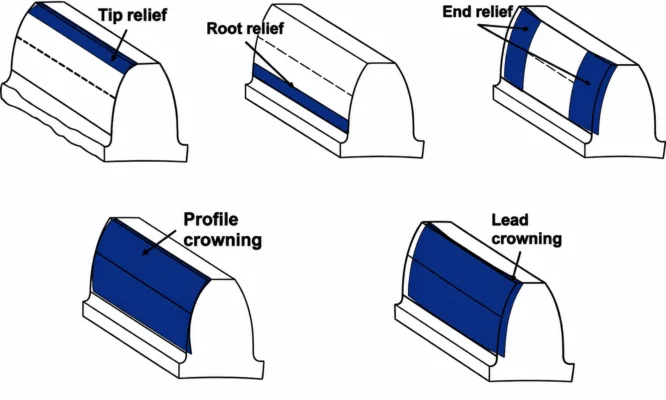
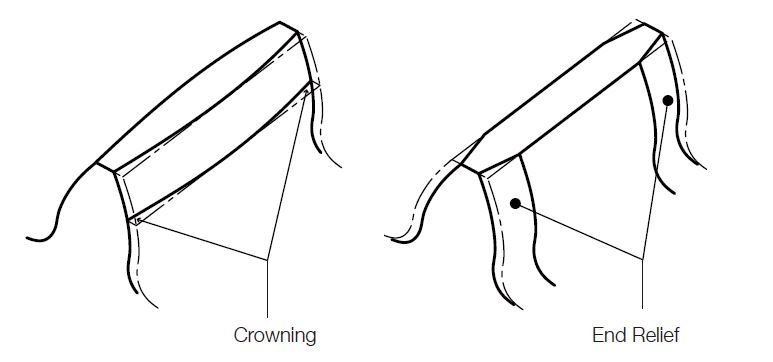
Crowning gives the working tooth surface a slight convex curve. Here, the focus is on lead crowning, which changes the surface along the tooth length, from the toe towards the heel.
How Does Crowning Work?
A straight tooth lead can be sensitive to small angular changes between the gears. If the shaft or housing moves under load, contact may shift towards one end of the tooth.
A slight crown changes the surface shape and can make contact less sensitive to these small movements. This is why lead crowning is often considered when the gear set is expected to experience shaft deflection or slight misalignment during operation.
Crowning may be useful when:
- Shafts or housings are expected to deflect under torque.
- Small angular changes may occur during operation.
- The load changes during the duty cycle.
- Contact needs to stay away from the tooth edges.
Can Too Much Crowning Cause Problems?
Yes. Too much crowning can make the contact area narrow and raise local stress. Too little may not make a useful difference.
The amount should be based on gear size, expected deflection, load range and the geometry of the mating gear. It should not be selected simply because a larger correction sounds safer.
What Is Tip Relief?
Tip relief is a small, controlled reduction of material near the tooth tip. It changes the tooth profile rather than the lead along the tooth length.
Why Is Tip Relief Used?
When a gear carries torque, its teeth bend slightly as they come into contact. This movement can cause unwanted contact near the tip.
Tip relief changes the local profile to make room for this movement and help control how the teeth engage. It may also be considered when managing transmission error in applications where smooth engagement is important.
What Happens If Tip Relief Is Excessive?
Too much relief removes more of the working surface than necessary. This can reduce the area available to carry load and change how the force is distributed across the teeth.
For bevel gears, the correction must be designed for the actual tooth shape. A value used for a spur gear should not simply be copied to a bevel gear.
Crowning vs. Tip Relief: What Is the Difference?
The main difference is where the tooth is changed and what the engineer wants to control.
| Comparison | Crowning | Tip Relief |
| Direction | Along the tooth length | Along the tooth profile |
| Main area | From toe to heel | Near the tooth tip |
| Main purpose | Manage contact across the face width | Manage contact near the tip |
| Main design factors | Shaft deflection and angular misalignment | Tooth deflection and engagement |
| Risk if excessive | Contact area may become too narrow | Working tooth area may be reduced |
They are not competing solutions. Crowning changes the surface along the tooth length, while tip relief changes the profile near the tip.
Some bevel gear designs may need both modifications. Others may need only one or neither. The choice comes from the gear geometry, operating load and expected contact conditions.
How Do Tooth Modifications Affect Gear Contact?
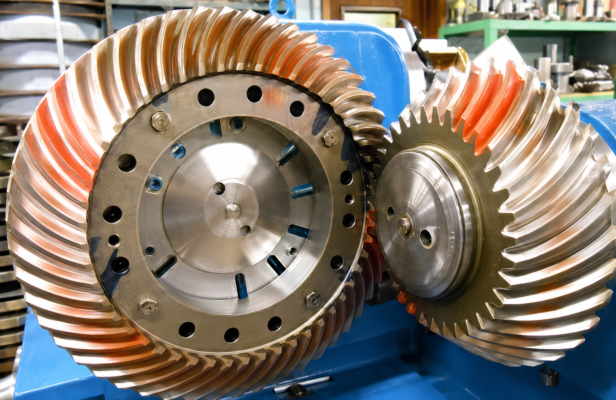
A contact pattern shows where two mating gears touch. It helps engineers see whether the contact is in the intended area.
What Does an Uneven Contact Pattern Tell You?
If the pattern moves towards a tooth edge, the gear geometry, mounting position, backlash and bearing support should be checked. A small contact area can also mean that the load is not spread as intended.
Crowning or tip relief may help, but the result changes with load and speed. A pattern checked without load does not always show what will happen in service.
Engineers should review the bevel gear contact pattern together with the operating conditions and assembly details.
What Should Engineers Check Before Choosing a Modification?
There is no single crowning or tip relief value for every bevel gear. Before changing the tooth shape, engineers should review several points.
Gear Geometry
Gear type, tooth count, ratio, face width and mating gear dimensions all affect the required modification. Spiral bevel and hypoid gears need particular attention because of their complex tooth geometry.
Operating Load
Torque, speed, load direction and duty cycle affect how much the gear system may deform. For reversing applications, both drive-side and coast-side contact may need review.
Shaft and Housing Stiffness
The expected movement of shafts, bearings and housing under load can help engineers decide whether lead crowning or another correction is needed.
Assembly Conditions
Shaft angle, mounting distance, backlash and bearing positions affect how the gears mesh. These details should be confirmed before changing the tooth geometry.
The bevel gear mounting distance is one of the key details because it affects how the mating gears sit together.
Manufacturing and Inspection
The selected modification must be achievable through the planned manufacturing process. The finished tooth geometry should also be measurable against an agreed inspection specification.
For demanding applications, loaded tooth contact analysis can predict how contact changes with torque and component deflection. Prototype testing can then help check the design.
How Can Buyers Check the Finished Gear?
A supplier saying that a gear has been crowned or tip-relieved does not prove that it meets the drawing. Buyers should agree on the inspection method before production.
Recommended Inspection Items
Depending on the project, checks may include:
- Tooth profile and lead measurements.
- Runout and other critical dimensions.
- Backlash under agreed assembly conditions.
- Contact pattern checks on the mating gear set.
- Material and heat-treatment records, where required.
Why Does the Inspection Setup Matter?
For a matched bevel gear set, the contact check must use the correct mounting references. A gear set at the wrong mounting distance can show a misleading pattern.
Buyers should also state the required bevel gear accuracy grade and inspection records in the RFQ.
Accuracy grade, tooth modification and contact pattern are related, but they are not the same acceptance requirement.
What Information Should Go into an RFQ?
When asking for custom bevel gears, provide information about the complete gear pair where possible. The mating gear affects both the design and the inspection.
RFQ Information Checklist
A useful RFQ should include:
- Drawings or 3D models of the pinion and mating gear.
- Gear type, tooth count, ratio and shaft angle.
- Operating torque, speed and duty cycle.
- Mounting distance and backlash requirements.
- Material and heat-treatment requirements.
- Required accuracy and inspection scope.
- Contact pattern photos or previous inspection records, if available.
If the crowning or tip relief values have not been decided, do not guess them. Send the application details and available gear data first. The manufacturer can review the information and identify what else is needed.
How Wenlio Supports Custom Bevel Gear Projects
Wenlio makes custom precision bevel gears for agricultural machinery, heavy trucks, construction equipment, EV drivetrains and industrial automation.
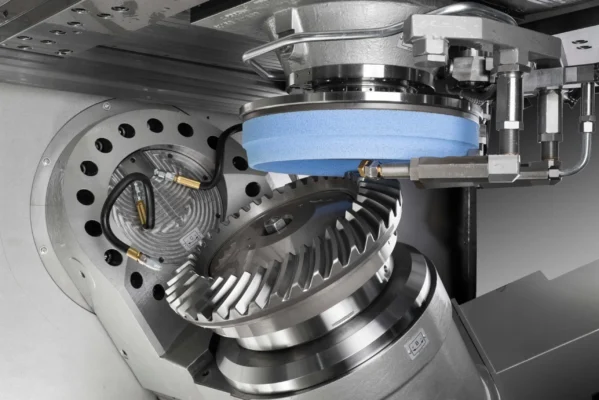
A project review covers the gear pair, material, heat treatment, finishing route and inspection needs. CNC gear grinding may be used when the design and manufacturing process allow it.
Tooth profile, lead characteristics and contact checks should be agreed before production. This gives both sides a clear basis for sample approval and batch inspection.
FAQ
Are crowning and tip relief the same?
No. Crowning changes the tooth surface along its length. Tip relief changes the profile near the tooth tip. They are used to manage different contact conditions.
Do all bevel gears need crowning?
No. It depends on the gear design, load, expected shaft and housing deflection, and assembly conditions. Some bevel gears do not need additional crowning.
Can crowning prevent all edge contact?
No. It may help with small, expected movements, but it cannot correct a wrong mounting distance, serious misalignment or poor bearing support.
Does tip relief always improve gear performance?
No. The result depends on the design. Too much relief can reduce the working tooth area and affect load sharing.
What information is needed to specify tooth modifications?
Start with the gear drawings, mating gear details, torque, speed, duty cycle, mounting distance, backlash and inspection requirements. More demanding gear sets may also need loaded tooth contact analysis.
Conclusion
Crowning changes the tooth surface along its length. Tip relief changes the profile near the tip. Both can be useful, but neither should be added without looking at the gear pair and its working conditions.
If you are developing a new bevel gear set or reviewing an existing one, Contact Us with your drawings, mating gear details and application information. The Wenlio team can review the requirements and discuss manufacturing and inspection options for your project.
