
Blogs, Bevel Gear
How to Choose the Right Bevel Gear Manufacturer
Sep
Choosing the right bevel gear manufacturer is a critical step for companies sourcing precision transmission components. While many suppliers can produce bevel gears, differences in manufacturing capability, gear accuracy, material control, and inspection processes can directly affect product performance, assembly reliability, and long-term operating stability.
For custom bevel gear projects, buyers need to evaluate more than price and delivery time. Understanding a manufacturer’s experience with different bevel gear types, engineering support, production processes, and quality control methods can help reduce sourcing risks and build a more reliable supply relationship. This guide explains the key factors buyers should consider when selecting a bevel gear manufacturer for their applications.
What Makes a Reliable Bevel Gear Manufacturer?
A reliable bevel gear manufacturer should have:
- Experience producing different bevel gear types, including straight bevel gears, spiral bevel gears, and hypoid gears;
- Complete manufacturing processes, including tooth cutting, heat treatment, grinding, and final inspection;
- The ability to review drawings, samples, and application requirements;
- Clear quality inspection procedures and documentation;
- Experience supporting projects from prototype validation to production.
For custom bevel gear projects, manufacturing capability and quality control are often more important than simply choosing the lowest price.
1. Check Bevel Gear Manufacturing Capability
The first step when choosing a bevel gear manufacturer is confirming whether the supplier has real experience with bevel gear production.
Different applications require different gear designs, accuracy levels, and performance characteristics.
For example:
- Agricultural machinery gears often need to handle high impact loads;
- Automotive and electric drive systems usually require smooth operation, low noise, and high efficiency;
- Construction equipment gears need strong torque capacity and long service life.
Therefore, buyers should check whether the manufacturer can produce different types of bevel gears.
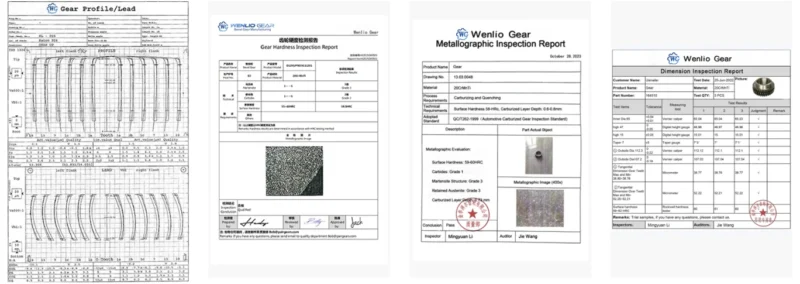
Common bevel gear types include:
| Type | Features | Applications |
| Straight Bevel Gears | Simple structure and suitable for general power transmission | Industrial machinery, equipment drives |
| Spiral Bevel Gears | Smoother engagement and suitable for higher speed and load | Automotive systems, gearboxes |
| Hypoid Gears | Offset design with improved transmission performance | Vehicle drive systems |
| Zerol Bevel Gears | Combines characteristics of straight and spiral bevel gears | Special transmission systems |
| Miter Gears | Usually used for changing transmission direction by 90° | Precision machinery |
A professional bevel gear manufacturer should not only know how to machine gears but also understand how different gear designs perform in real applications.
2. Gear Accuracy and Inspection Capability
For custom bevel gear projects, completing the machining process does not automatically mean the gears will perform correctly.
Bevel gears are precision transmission components that usually work as matched sets. Tooth profile accuracy, tooth alignment, runout, backlash, and contact pattern all affect the final meshing performance.
When evaluating a manufacturer, buyers should pay attention to inspection capability, including:
| Inspection Item | Why It Matters |
| Tooth Profile | Verifies whether the tooth geometry meets design requirements |
| Tooth Lead | Checks tooth alignment accuracy |
| Runout | Helps evaluate rotational stability |
| Backlash | Ensures proper gear clearance |
| Contact Pattern | Confirms the actual meshing condition |
For demanding applications such as automotive, electric drive, and construction equipment, professional gear inspection capability is an important factor in supplier evaluation.
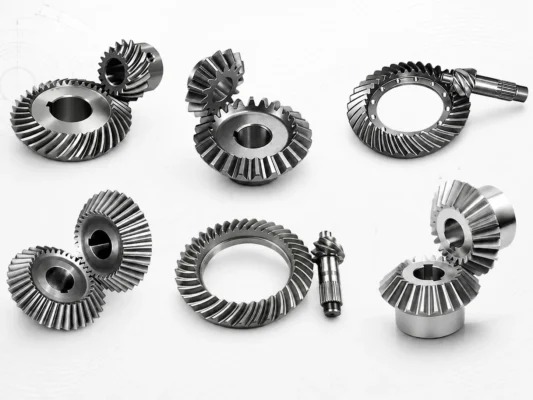
A qualified manufacturer should be able to provide:
- Dimensional inspection reports;
- Material certificates;
- Hardness test results;
- Gear accuracy inspection records.
These documents help customers verify quality and reduce uncertainty during assembly and acceptance.
3. Confirm Material and Heat Treatment Experience
Bevel gears often operate under high torque and repeated loading conditions. Therefore, material selection and heat treatment directly affect gear strength, wear resistance, and service life.
Buyers should not only ask:
“Which materials can you manufacture?”
A more important question is:
“Can you recommend the right material and heat treatment based on the working conditions?”
Common gear materials include:
- 20CrMnTi
- 8620
- 9310
- 40Cr
Common heat treatment processes include:
- Carburizing
- Hardening
- Tempering
- Nitriding
For example, bevel gears requiring high wear resistance may use carburizing treatment to improve surface hardness while maintaining core toughness.
An experienced manufacturer should consider:
- Load conditions;
- Operating speed;
- Working environment;
- Expected service life;
before recommending a suitable material and heat treatment solution.
4. Understand the Complete Manufacturing Process
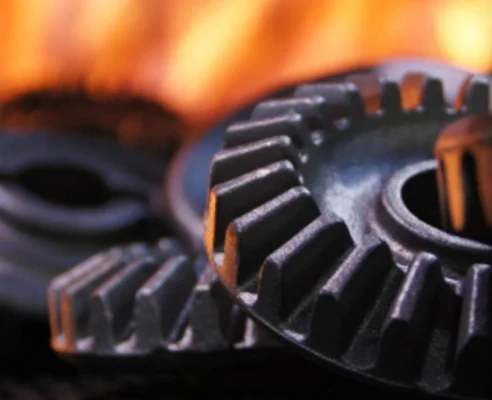
A reliable bevel gear manufacturer usually has a complete production process rather than only performing one machining step.
Typical bevel gear manufacturing process includes:
| Process | Purpose |
| Forging | Improves material structure and basic strength |
| Milling | Generates the initial tooth profile |
| Heat Treatment | Improves hardness and durability |
| Grinding | Improves gear accuracy |
| Lapping | Optimizes tooth contact performance |
| Inspection | Confirms final quality |
For high-precision bevel gears, every manufacturing stage is connected.
For example, heat treatment distortion control, grinding allowance planning, and final contact pattern inspection all require practical manufacturing experience.
5. Pay Attention to Engineering Support Before Production
Many problems in custom gear projects do not happen during machining. They happen before production starts.
Common issues include:
- Incomplete drawings;
- Missing gear parameters;
- Insufficient mating gear information;
- Unclear installation requirements.
If a supplier only provides a quotation based on drawings without technical review, problems may appear later, such as:
- Poor assembly performance;
- Incorrect contact patterns;
- Design modifications after sampling.
Therefore, buyers should choose a manufacturer that can participate in technical discussions before production.
A professional project workflow usually includes:
- Drawing Review
- Requirement Clarification
- Manufacturing Planning
- Prototype Validation
- Inspection
- Production Approval
6. Compare Quality Documentation and Project Management Capability
For overseas buyers, the ability to provide clear quality documents is also an important indicator of supplier capability.
Before cooperation, buyers should confirm whether the manufacturer can provide:
- Material certificates;
- Dimensional inspection reports;
- Key measurement records;
- Sample validation support;
- Stable production management.
A mature bevel gear manufacturer does not only manufacture products. It also helps customers manage the entire sourcing process.
7. Do Not Compare Only by Price
Price is an important factor in purchasing decisions, but for precision bevel gears, the lowest quotation does not always represent the lowest overall cost.
Different suppliers may have different costs because of:
- Material grades;
- Heat treatment methods;
- Accuracy requirements;
- Inspection standards;
- Manufacturing processes.
If technical differences are ignored during the early stage, additional costs may occur later:
- Assembly problems;
- Rework costs;
- Delivery delays;
- Re-sourcing risks.
Therefore, buyers should evaluate suppliers based on multiple factors:
| Evaluation Factor | What to Check |
| Manufacturing Capability | Experience with similar bevel gear projects |
| Quality Control | Inspection process and documentation |
| Engineering Support | Technical communication capability |
| Communication | Response speed and requirement confirmation |
| Production Stability | Ability to support long-term cooperation |
Why Choose Wenlio as Your Bevel Gear Manufacturing Partner?
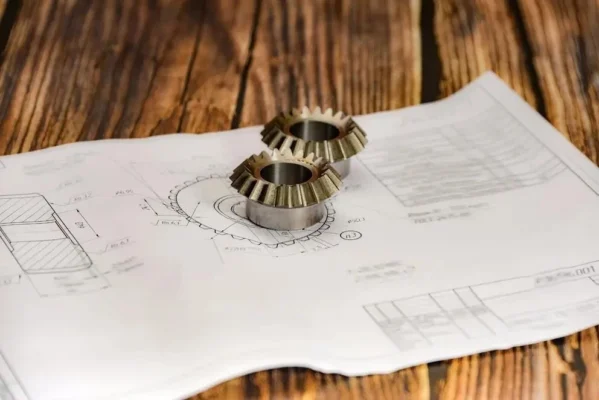
Wenlio focuses on precision bevel gear manufacturing, providing customized bevel gear solutions based on customer drawings, samples, and application requirements.
With complete manufacturing processes and quality control systems, Wenlio supports different bevel gear applications, including:
- Agricultural Machinery
- Automotive Transmission
- Construction Equipment
- Industrial Applications
- Electric Drive Systems
From initial technical review to prototype validation and production support, Wenlio helps customers develop reliable transmission components for different applications.
FAQ
What Should I Check Before Working With a Bevel Gear Manufacturer?
Before starting a project, buyers should review the manufacturer’s bevel gear experience, production capability, inspection methods, and ability to support technical communication.
Can a Manufacturer Help Review My Bevel Gear Drawing?
Yes. A qualified manufacturer can review drawings, gear specifications, and application requirements to confirm production feasibility before manufacturing.
Why Do Bevel Gear Quotes From Different Suppliers Vary?
Different quotations may be based on different materials, manufacturing processes, accuracy requirements, heat treatment methods, and inspection standards.
How Do I Know If a Bevel Gear Supplier Can Meet My Quality Requirements?
Buyers can check the supplier’s machining processes, inspection equipment, quality reports, and experience with similar bevel gear applications.
What Information Should I Prepare for a Custom Bevel Gear Project?
It is helpful to provide drawings or samples, gear parameters, material requirements, quantity, application details, and any inspection requirements.
Conclusion
Choosing the right bevel gear manufacturer requires more than comparing prices. Manufacturing capability, engineering experience, quality control, and communication support all play important roles in achieving reliable gear performance.
For custom bevel gear projects, providing detailed drawings, samples, or application requirements helps manufacturers develop a more suitable solution. Wenlio supports customers with precision bevel gear manufacturing, technical review, and quality control throughout the project process. Contact Wenlio to discuss your bevel gear requirements.
