
Blogs, Bevel Gear
Hypoid Gear Offset: How Does It Affect Performance?
Sep
Introduction
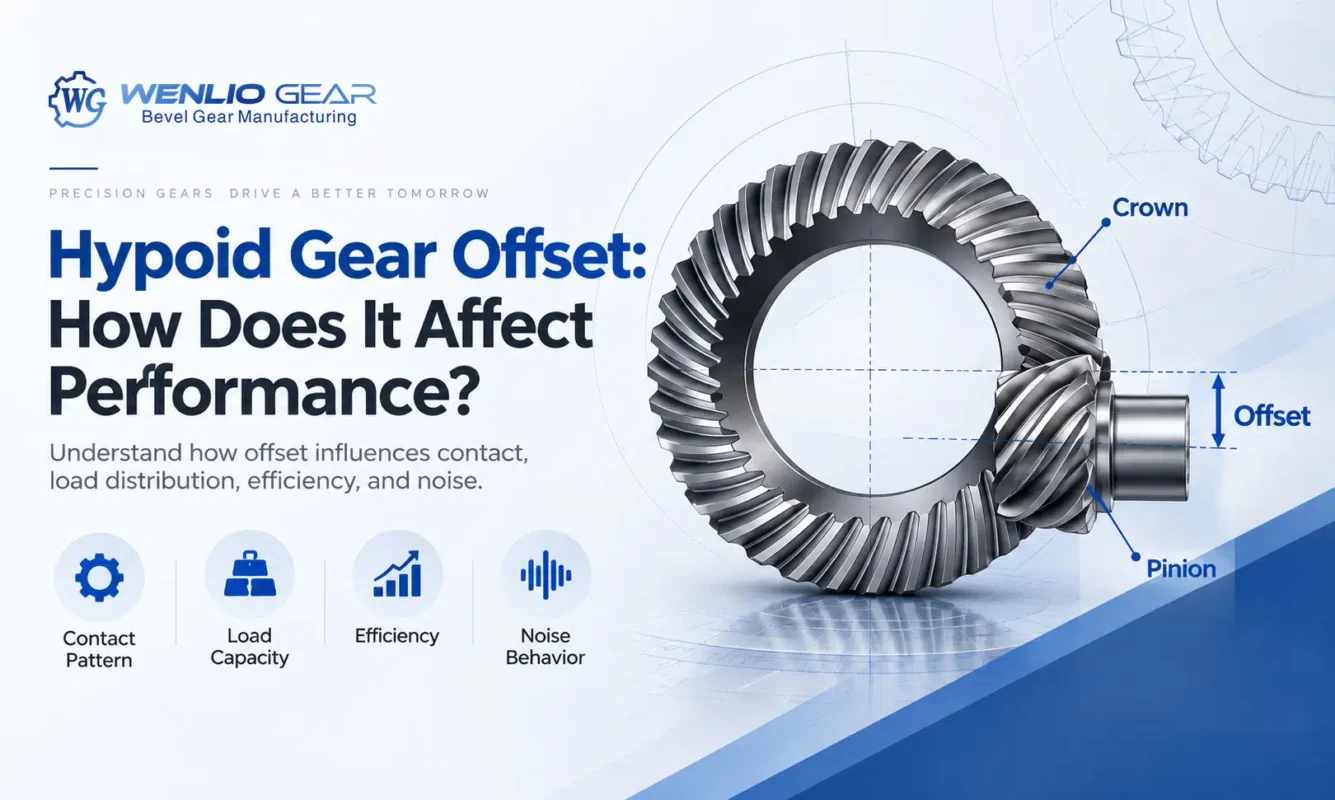
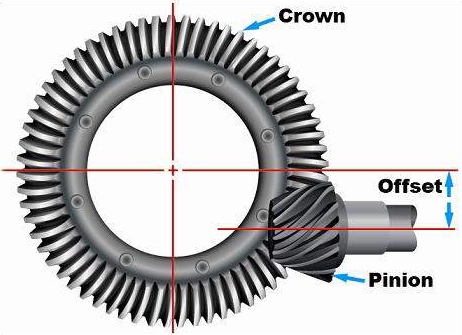
A hypoid gear set differs from a conventional bevel gear in one important way: the pinion axis and gear axis do not intersect. The shortest distance between those axes is the hypoid gear offset. It may look like a simple layout dimension, but it influences pinion geometry, tooth contact, sliding, lubrication, and the final mounting condition of the pair.
For custom hypoid gear projects at Wenlio, offset is reviewed together with ratio, shaft angle, mounting distance, backlash, and mating-part information. Changing it is not the same as simply moving a shaft in the housing. Even a small layout change may require the tooth geometry and installation conditions to be checked again.
What Is Hypoid Gear Offset?
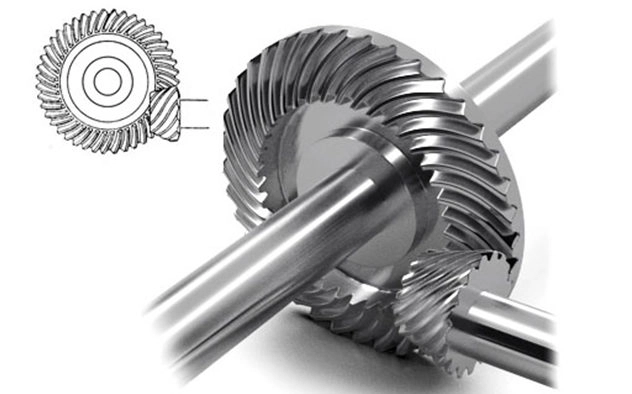
In a conventional spiral bevel gear arrangement, the shaft axes normally intersect. In a hypoid gear, the pinion axis is offset from the gear axis, so the two axes do not intersect.
This gives the designer more freedom in positioning the shafts. It is useful in axles, reducers, and compact right-angle drives where shaft height or packaging space matters.
The offset, however, becomes part of the gear geometry itself. A drawing that only states:
Offset = 30 mm
may not provide enough information. Shaft angle, ratio, mounting references, and offset direction also need to be clear.
Preferably, show the direction using shaft-axis references on the drawing. Avoid relying only on terms such as “positive” and “negative” offset, as different drawing conventions may lead to different interpretations.
What Changes When Hypoid Gear Offset Increases?
A larger offset does not automatically mean better performance.
Changing the offset changes several connected design conditions.
| Factor | Possible Effect |
| Pinion geometry | Different size and tooth proportions |
| Tooth contact | Different contact path and load distribution |
| Sliding | Changes in relative tooth-surface motion |
| Friction | Possible change in sliding losses |
| Lubrication | Different oil-film requirements |
| Packaging | More freedom in shaft placement |
| Installation | Bearing and housing positions may need revision |
The important point is that offset belongs to the gear-pair design. It is not simply a housing dimension added after the tooth geometry has already been fixed.
How Does Offset Affect Pinion Geometry?
Offset gives the designer more freedom when defining the pinion. For a given ratio and shaft layout, it may allow a different pinion pitch diameter or tooth proportion, which can help with packaging or load targets.
A larger offset, however, does not automatically mean a stronger gear. Load capacity still depends on face width, tooth number, material, heat treatment, root geometry, contact distribution, and operating load.
If you change the shaft layout, you should normally recalculate the complete gear pair rather than rely on adjusting a single dimension.
How Does Hypoid Gear Offset Affect Tooth Contact?
A hypoid gear pair is designed to run under a defined shaft and mounting relationship.
The intended contact condition depends on offset, shaft angle, mounting distance, backlash, and the installed position of the gear and pinion.
If the actual shaft relationship differs from the design, the contact pattern can move across the tooth surface. It may shift toward the toe, heel, root, or outer part of the tooth. In more serious cases, the load can become concentrated near an edge.
That is why an individual gear can pass dimensional inspection and still perform poorly after assembly.
The bevel gear contact pattern is more useful when checked together with mounting position and backlash rather than as a stand-alone result.
Does More Offset Mean More Sliding?
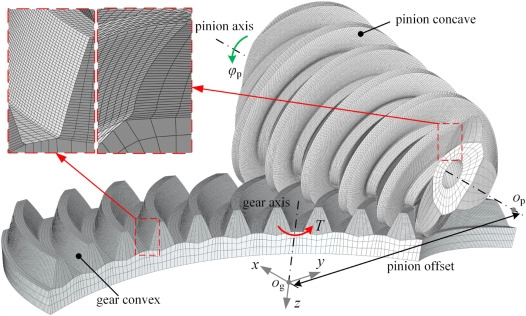
Hypoid gears generally have more sliding action than intersecting-axis bevel gears.
The amount of sliding is not determined by offset alone. Spiral geometry, ratio, contact position, speed, and load also affect the relative motion between the tooth surfaces.
In practice, stronger sliding action places more importance on lubrication and tooth-surface condition. If high load is combined with poor contact or unsuitable lubrication, temperature rise, wear, scuffing, or changes in running noise may appear.
This is one reason lubricant selection matters in hypoid applications. The gear set needs a suitable oil film under both load and sliding motion.
How Does Offset Affect Efficiency and Heat?
Sliding creates friction, so offset can influence efficiency indirectly through the geometry and sliding condition it creates.
Actual hypoid gear efficiency also depends on speed, load, surface finish, lubrication, bearing losses, and contact quality. A change in offset does not produce a fixed efficiency change by itself.
If a gear set runs hot after installation, backlash, mounting position, bearings, lubrication, and contact condition should also be checked. The same factors are covered in Wenlio’s article on bevel gear overheating.
What Is the Relationship Between Offset, Backlash, and Mounting Distance?
These terms often appear on the same drawing, but they describe different things.
Offset defines the separation between the shaft axes.
Mounting distance defines where the gear or pinion sits relative to a reference surface.
Backlash is the clearance between the mating tooth flanks.
They interact during assembly, but one cannot replace another.
For example, if you install the pinion in the wrong position, you may still adjust the backlash into the target range while the contact pattern remains incorrect.
Correct backlash does not automatically mean correct contact.
This is why bevel gear mounting distance and bevel gear backlash are usually reviewed together during setup.
Can You Change the Offset Without Redesigning the Gear Set?
For an established hypoid gear design, usually not.
Suppose the original pair uses a 30 mm offset. If you later change the housing to 35 mm but keep the original tooth geometry unchanged, you should not treat it as the same gear set.
The revised layout may require changes to pinion and gear geometry, mounting positions, backlash target, bearing locations, and housing dimensions.
If the transmission layout changes, an updated shaft arrangement is much more useful than a note asking the gear supplier to “increase the offset by 5 mm”
Can You Determine Hypoid Gear Offset From an Old Sample?
A single worn gear usually does not provide enough information to recover the original offset with confidence.
Offset describes the relationship between two shaft axes, so the mating gear and assembly layout are often more valuable than the individual part.
Useful information includes:
- Gear and pinion together;
- Housing or assembly drawing;
- Bearing locations;
- Shaft layout;
- Original mounting references.
Wear can also mislead the review. Existing contact marks show how the gear has been running, not necessarily how it was originally designed.
For sample-based work, a measured offset is only one reference. The mating gear and original shaft arrangement are often just as important.
What Should Buyers Provide for a Hypoid Gear RFQ?
A useful hypoid gear RFQ should describe the mating system, not only the individual gear.
| RFQ Item | What It Clarifies |
| Gear & pinion drawings | Complete mating geometry |
| Offset value and direction | Shaft relationship |
| Shaft angle | Transmission layout |
| Gear ratio | Basic geometry |
| Mounting distance | Installed position |
| Backlash | Assembly clearance |
| Contact requirement | Meshing acceptance |
| Material & heat treatment | Strength and process route |
| Load & speed | Operating conditions |
| Lubrication | Sliding and surface protection |
If the project comes from an old assembly, clearly distinguish values taken from the original drawings from those measured on the existing parts. That distinction can prevent assumptions during technical review.
When working with a custom hypoid gear manufacturer, complete mating and mounting information usually makes the RFQ review much more efficient.
How Does Wenlio Review Hypoid Gear Offset?
For a custom hypoid gear project, Wenlio reviews offset as part of the complete gear-pair relationship.
With complete drawings, the shaft layout, mounting references, ratio, and mating geometry provide the basis for manufacturing and inspection planning. For sample-based projects, the gear, pinion, housing, bearing positions, and available application data need to be considered together.
For sample-based work, a measured offset is only one reference. The mating gear, shaft layout, and original mounting condition often provide just as much information when the original design is being reviewed.
FAQ
How Do You Measure Hypoid Gear Offset?
Measure hypoid gear offset as the shortest distance between the pinion axis and the gear axis. Then, clearly show both the offset value and its direction on the drawing.
Does a Larger Hypoid Offset Make the Gear Stronger?
Not by itself. Offset can change pinion proportions, but strength still depends on tooth geometry, material, heat treatment, face width, contact, and operating load.
Does Hypoid Gear Offset Affect Efficiency?
Yes, indirectly. Offset changes gear geometry and sliding behavior, while actual efficiency also depends on lubrication, load, speed, bearings, and tooth contact.
Can You Adjust Hypoid Offset During Assembly?
Not in the same way as backlash or mounting distance. Instead, the shaft and housing layout normally determines the actual offset. As a result, any significant change in that relationship requires another review of the gear geometry and contact condition.
What Should You Provide for a Custom Hypoid Gear Quote?
Provide gear and pinion drawings, offset and direction, shaft angle, ratio, mounting references, backlash, material, heat treatment, contact requirements, and operating conditions.
Conclusion
Hypoid gear offset is more than a packaging dimension. It influences the geometry of the gear pair and, through that geometry, affects tooth contact, sliding, lubrication, mounting, and running behavior.
When reviewing a new design or an existing gear set, it is more useful to look at the complete shaft and mating relationship than to focus on the offset number alone. Drawings, mating gear information, mounting references, and operating conditions can be submitted through Contact Us for technical review.

Pingback: Automotive Differential Gear: How It Works - Wenlio