
Blogs
Spur Gear vs Helical Gear: Which Fits Your Application?
Aug
Introduction
Spur gears and helical gears are both widely used in parallel-shaft transmissions, but their tooth-line directions are different. As a result, they also differ significantly in meshing behavior, noise, axial force, manufacturing, and application conditions.
For custom gear projects, the choice cannot be based simply on which type is “more advanced.” In Wenlio project reviews, speed, torque, center distance, bearing arrangement, noise target, material, and manufacturing requirements are usually considered together.
What Is the Main Difference Between Spur and Helical Gears?
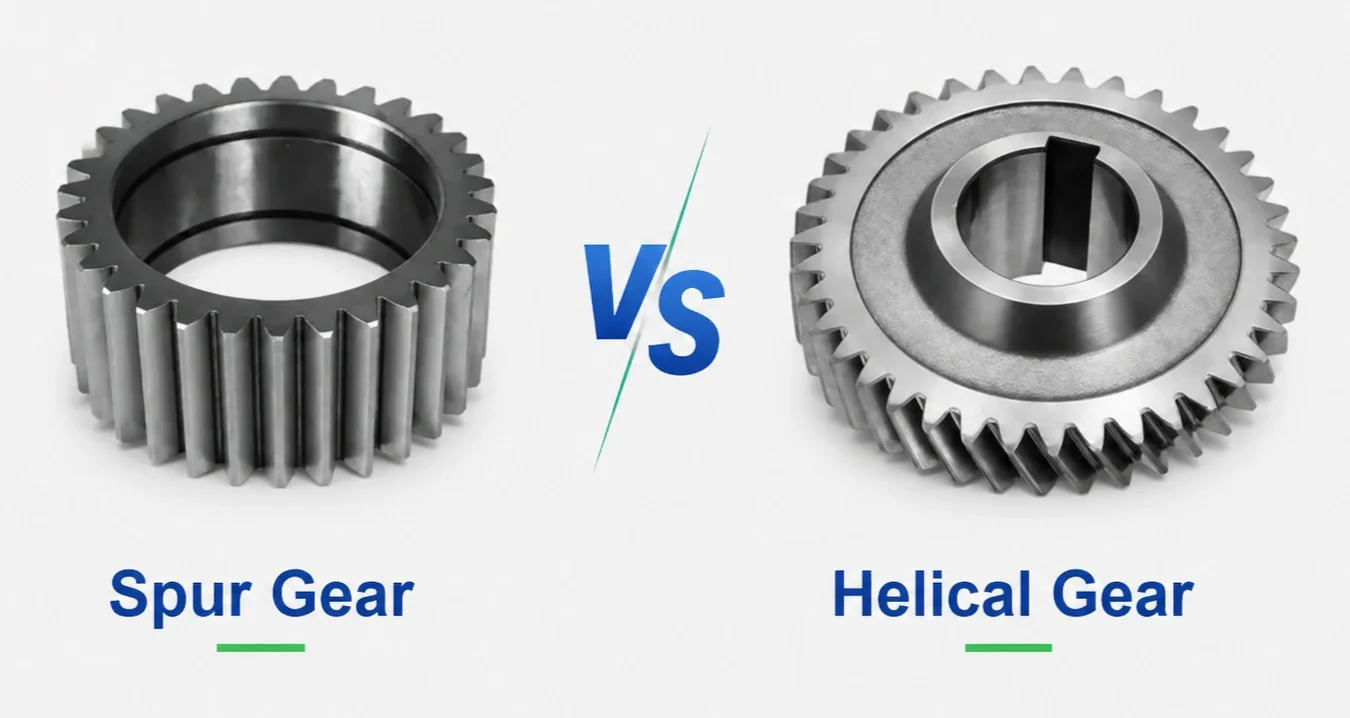
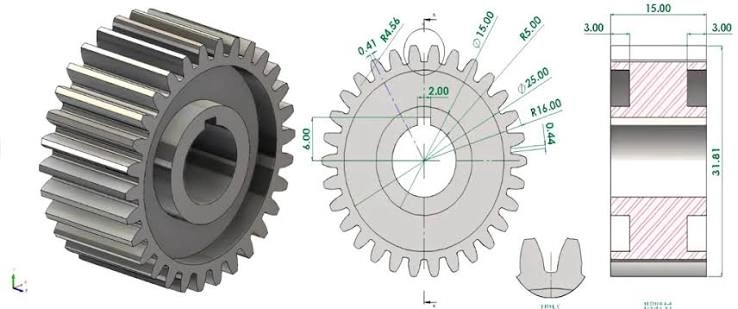
Spur gears use straight teeth parallel to the shaft axis, while helical gears use angled teeth that engage more progressively. This difference in tooth-line direction directly affects the operating characteristics of the gears.
Spur gears have a more direct structure and do not generate additional axial force from a helix angle. Helical gears provide more progressive engagement, but they generate axial thrust and place additional requirements on bearings and the installation structure.
Therefore, neither type is the “better” choice for every project.
How Do Spur and Helical Gears Compare?
| Comparison | Spur Gear | Helical Gear |
| Tooth form | Straight teeth | Angled teeth |
| Engagement | More direct | More progressive |
| Noise | May increase at higher speeds | Generally smoother under suitable conditions |
| Axial thrust | Minimal from tooth angle | Generates axial thrust |
| Bearing demand | Relatively simple | Must support axial load |
| Manufacturing | Relatively straightforward | More geometry to control |
| Typical use | Simple parallel-shaft drives | Smoother or higher-speed drives |
These are general design characteristics. Actual performance is also affected by gear accuracy, material, heat treatment, lubrication, and installation.
When Is a Spur Gear a Better Choice?
When the Drive Layout Is Simple
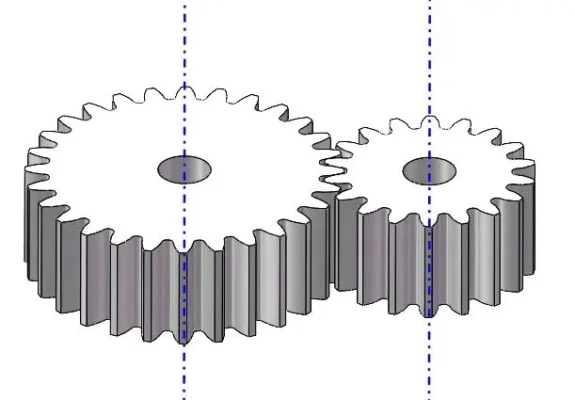
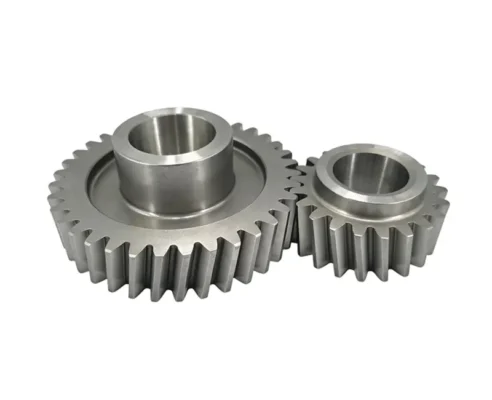
Spur gears are suitable for relatively direct power transmission between parallel shafts.
If the project does not have very strict noise requirements and a simpler shaft and bearing arrangement is preferred, a spur gear is often worth evaluating first.
When Axial Thrust Should Be Avoided
Because the tooth lines of a spur gear are parallel to the shaft axis, no additional axial force is generated by a helix angle.
For equipment with limited space for bearing arrangements, or where the existing structure is not suitable for carrying significant axial load, this can be important.
When Manufacturing Simplicity Matters
The tooth geometry and manufacturing route of spur gears are generally more straightforward.
However, “simple structure” does not mean accuracy can be ignored. Module, pressure angle, tooth thickness, runout, and mating conditions still need to meet the drawing requirements.
When Is a Helical Gear a Better Choice?
When Smoother Engagement Is Important
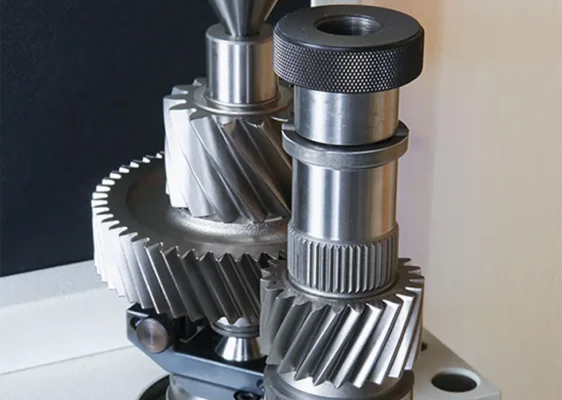
Helical gears have tooth lines with a helix angle, allowing the tooth surfaces to enter and leave mesh gradually.
This progressive engagement is usually more suitable for transmission positions that require smoother operation, higher speeds, or lower noise.
When Load Sharing Matters
Under suitable design and installation conditions, helical tooth geometry can provide more continuous tooth contact.
However, this does not mean that a helical gear always has higher load capacity. Gear size, material, heat treatment, face width, accuracy, and actual load still affect the final carrying capacity.
When the Bearing System Can Handle Axial Load
The helix angle generates axial force, so a helical gear cannot be selected based only on the gear itself.
Bearing type, shaft stiffness, and housing arrangement must also be able to support the corresponding axial thrust.
Does a Helical Gear Always Run Quieter?
Not necessarily.
The progressive engagement of helical gears usually helps reduce the impact created when the teeth first enter mesh, so under comparable design conditions, they may run more smoothly than spur gears.
However, actual noise is also affected by:
- Gear accuracy;
- Pitch and profile deviation;
- Tooth surface finish;
- Backlash;
- Shaft alignment;
- Bearing condition;
- Lubrication;
- Speed and load.
Therefore, simply replacing a spur gear with a helical gear does not mean the noise problem will definitely be solved.
How Does the Choice Affect Bearings and Installation?
This is one of the points that is easily overlooked when selecting between spur and helical gears.
Spur Gear
A spur gear mainly generates tangential and radial forces, so the bearing arrangement is usually relatively straightforward.
Helical Gear
In addition to tangential and radial forces, a helical gear also generates axial thrust.
The magnitude and direction of the axial load are affected by helix angle, torque, and gear arrangement. Therefore, bearing capacity and shaft positioning should be checked in advance during design.
If the existing equipment bearing arrangement was not designed for axial force, directly changing the gear type may affect the entire transmission system.
How Do Spur and Helical Gears Affect Manufacturing Cost?
It is not accurate to simply say that spur gears are always cheaper and helical gears are always more expensive, but their manufacturing requirements are different.
Spur gears usually have more direct tooth geometry, making machining and inspection relatively straightforward. Helical gears require control of the helix angle, tooth trace, and related tooth-surface parameters.
Actual quotation is also affected by:
- Gear size;
- Material;
- Heat treatment;
- Accuracy grade;
- Finishing process;
- Quantity;
- Inspection scope.
If the project also requires carburizing, grinding, or stricter tooth geometry inspection, the manufacturing route may have a greater effect on cost than the difference between spur and helical gears itself.
For more information on heat treatment, see gear heat treatment requirements.
What Should Be Confirmed Before Choosing Spur or Helical Gears?
For a custom gear project, the following information should be confirmed before determining the gear type:
| Information | Why It Matters |
| Shaft layout | Determines whether the arrangement suits parallel-shaft gears |
| Gear ratio | Defines the required tooth-count relationship |
| Center distance | Affects the basic gear geometry |
| Speed and torque | Influences load and operating requirements |
| Noise target | Helps evaluate engagement requirements |
| Bearing arrangement | Important when axial thrust is present |
| Material and heat treatment | Affects strength and wear resistance |
| Quantity and accuracy | Influences the manufacturing route |
If the drawing already defines the gear type, the manufacturing review should focus on parameters, material, accuracy, and process requirements rather than changing the original design without sufficient reason.
How Does Wenlio Review a Custom Spur or Helical Gear Project?
Wenlio reviews spur and helical gears as custom gear projects and determines the manufacturing route based on drawings and application conditions.
The review usually focuses on:
- Gear geometry
Module, tooth count, pressure angle, helix angle, and critical dimensions. - Shaft and mating conditions
Center distance, shaft connection, and mating gear information. - Operating requirements
Speed, torque, load, duty cycle, and noise requirements. - Material and heat treatment
Material, hardness, and subsequent machining are determined according to the drawing and performance requirements. - Accuracy and inspection
Runout, tooth geometry, and other critical inspection requirements are defined.
The purpose of this review is not to default to spur or helical gears, but to keep gear geometry, manufacturing requirements, and the actual application aligned.
FAQ
Are Helical Gears Better Than Spur Gears?
Not necessarily. Helical gears generally provide more progressive engagement, while spur gears have a more direct structure. The final choice depends on speed, load, noise, bearing arrangement, and cost requirements.
Which Gear Is Better for High-Speed Applications?
Under comparable design conditions, helical gears are usually more suitable for higher-speed applications that require smoother operation. However, accuracy, lubrication, load, and installation conditions still need to be considered.
Do Spur Gears Produce Axial Thrust?
Standard spur gears do not generate the type of axial force caused by the tooth angle in helical gears, so their bearing arrangements are usually simpler.
Why Do Helical Gears Require Axial Load Support?
Helical teeth generate axial thrust, so the bearing arrangement must be able to support both radial and axial loads according to the actual gear design.
What Information Is Needed for Custom Spur or Helical Gears?
It is recommended to provide the drawing, module, tooth count, pressure angle, helix angle where applicable, center distance, material, heat treatment, speed, torque, accuracy, and required quantity.
Conclusion
Spur gears have a direct structure and lower axial-force requirements, making them suitable for many conventional parallel-shaft transmissions. Helical gears provide smoother transmission through progressive engagement, but they also introduce axial thrust and higher system design requirements. The more suitable option should be determined by the actual shaft layout, speed, load, noise, bearing arrangement, and manufacturing conditions.
For a new custom gear project, drawings, gear parameters, operating conditions, and quantity can be submitted when you contact Wenlio to evaluate a suitable spur or helical gear manufacturing route.

Pingback: What Is Gear Contact Ratio and Why Does It Matter? - Wenlio